Category: Guides

  • Is It Safe to Swim in a Lake? Check These Risks First

    Is It Safe to Swim in a Lake? Check These Risks First

    Lake swimming can be suitable, but no lake is automatically safe. Check legal access, dated official water-quality information and current warnings, then assess rainfall, algae, cold water, currents and your ability to get out.

    Swim only where swimming is permitted, the access point is open and any entry-fee or booking requirements are met. Public access to a lakeshore does not automatically include permission to enter the water. A map pin, an open gate or other people swimming is not permission.

    The better choice is an officially monitored swimming area with no current closure or pollution warning, manageable conditions and a clear way out. Even there, an annual water-quality rating cannot account for a storm, sewage discharge or changing wind on the day you visit.

    Start with permission, status and dated official information

    Check the exact beach or swimming access point, not just the lake’s name. Different shores can have different owners, restrictions, test results and hazards. A park can remain open while swimming is banned.

    • Access: use the park authority, council, landowner or operator’s rules to establish whether visitors may swim there.
    • Status: establish whether the swimming area is open, seasonal, book ahead, closed or swimming banned. Check seasonal dates, opening hours, fees and reservations.
    • Dates: look for the date of the sample or advisory and the date the status information was last checked. An undated “good water quality” label is not enough.

    Use the responsible authority for the location. Monitoring systems do not cover every lake or every access point.

    Location Official information to check Important limit
    England Environment Agency designated bathing-water information, plus council and site-operator notices An annual classification is not a live assessment of today’s conditions.
    Wales, Scotland and Northern Ireland The relevant national environmental agency, local authority and site operator Do not use England’s bathing-water records as a UK-wide service.
    United States State or county health departments, environmental agencies and the managing park or operator The EPA beach programme supports coastal and Great Lakes monitoring; it does not provide results for every inland lake.
    US national parks National Park Service alerts and location-specific water advisories A swimming or water-contact closure takes precedence over an open park or trail.

    Where no official testing exists, water quality is unknown. If you cannot find a result, ask the managing authority whether local monitoring exists; a missing result is not evidence that the water is clean.

    What a water-quality result actually tells you

    In England, the Environment Agency classifies designated bathing waters as Excellent, Good, Sufficient or Poor under the Bathing Water Regulations 2013. Routine sampling normally takes place during the bathing season, from 15 May to 30 September. The annual classification summarises sampling history rather than conditions at the moment you enter.

    The regulatory indicators are Escherichia coli, usually shortened to E. coli, and intestinal enterococci. These bacteria indicate faecal contamination risk. They do not measure every virus, parasite, chemical, cyanotoxin or physical hazard in a lake.

    Read a result alongside its collection date, sampling location and any newer warning. A sample from one beach may not represent an inlet or the opposite shore. A result collected before heavy rain cannot describe contamination that arrived afterwards.

    A current closure or “do not swim” notice takes precedence over an older Excellent rating. Standard bacterial monitoring also does not necessarily include testing for blue-green algae toxins. Check the separate harmful-algal-bloom advice.

    Heavy rain can change the answer

    Heavy rainfall can wash animal faeces, sewage, sediment and urban runoff into a lake. Where combined sewers are used, intense rain can also trigger untreated wastewater discharges. The contamination risk can remain after the rain has stopped.

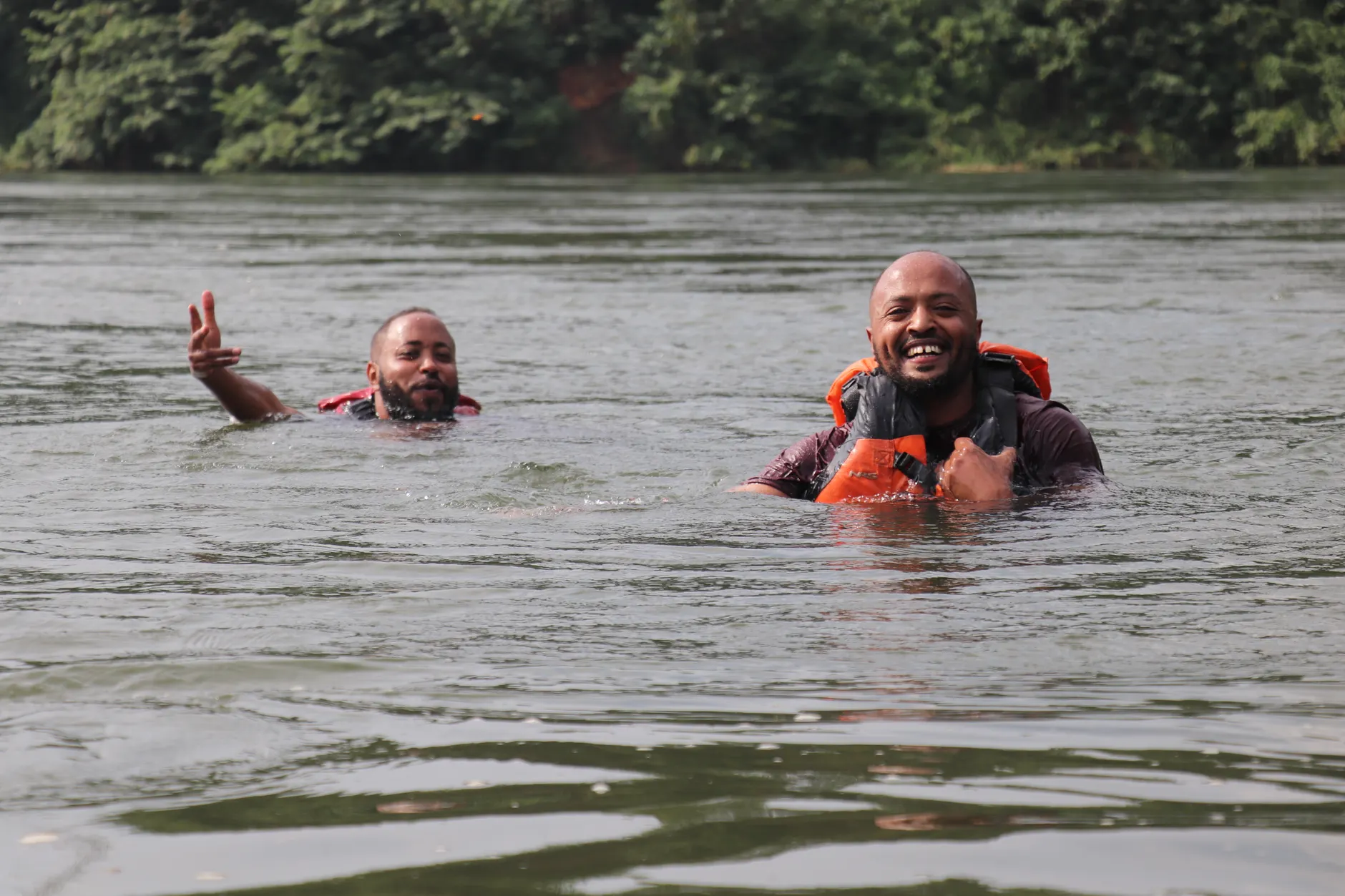
    zeng jinwen / Pexels

    Avoid swimming during heavy rain and follow the lake authority’s post-rain advice. Where local guidance says to wait at least 48 hours, follow that interval — but do not treat 48 hours as a universal clearance time. Some restrictions last longer, and an active warning remains a reason to stay out.

    Check rainfall across the lake’s catchment, not only at the beach. Streams may bring runoff from storms farther away. Brown or unusually murky water, floating debris, a sewage smell or visible discharge are reasons not to enter. Clear water does not prove that bacterial contamination is absent.

    Blue-green algae: stay out of suspected blooms

    Blue-green algae is the common name for cyanobacteria. These organisms can multiply rapidly in warm, nutrient-rich, still or slow-moving water. Some produce toxins that can harm people and animals.

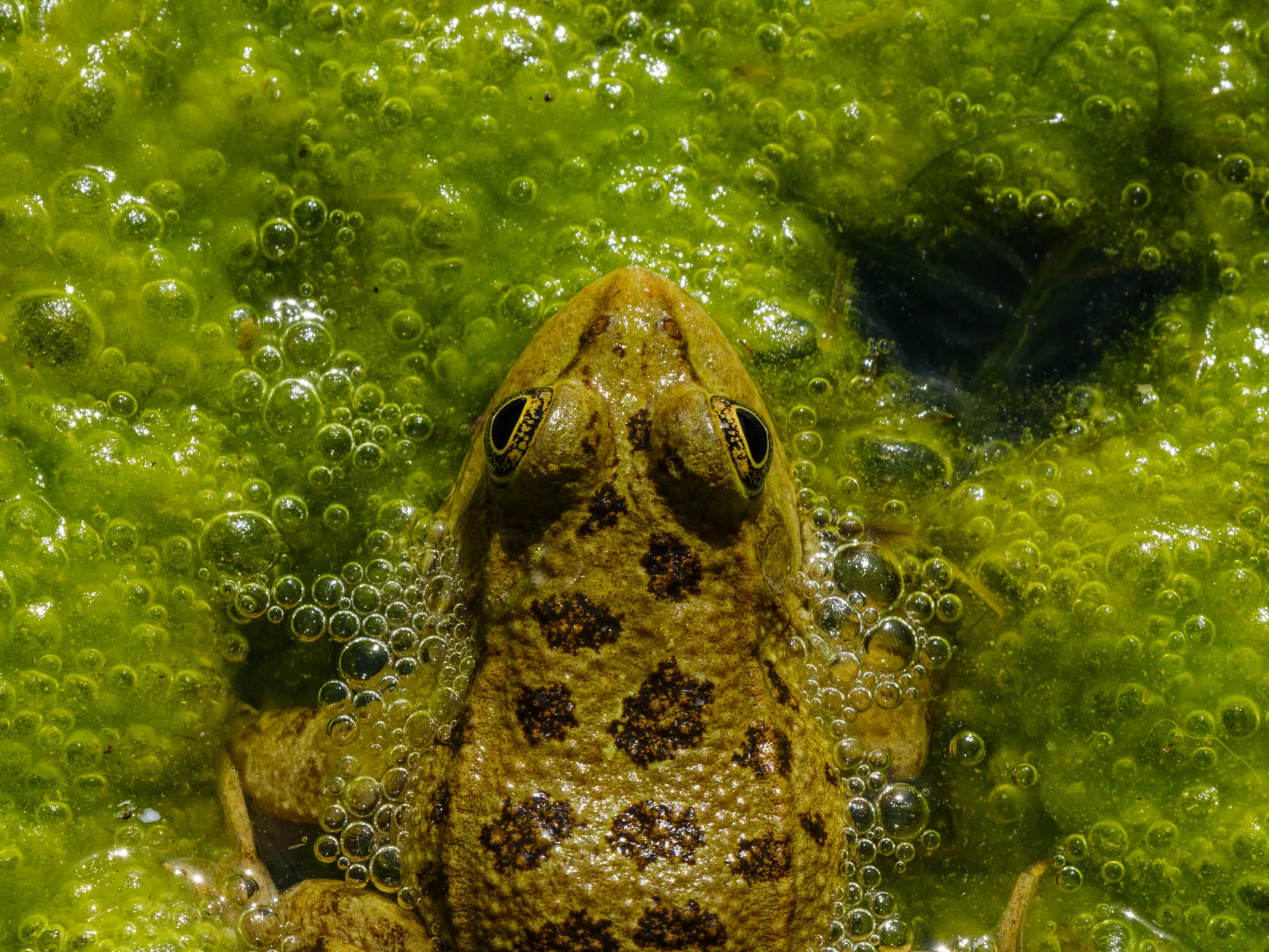
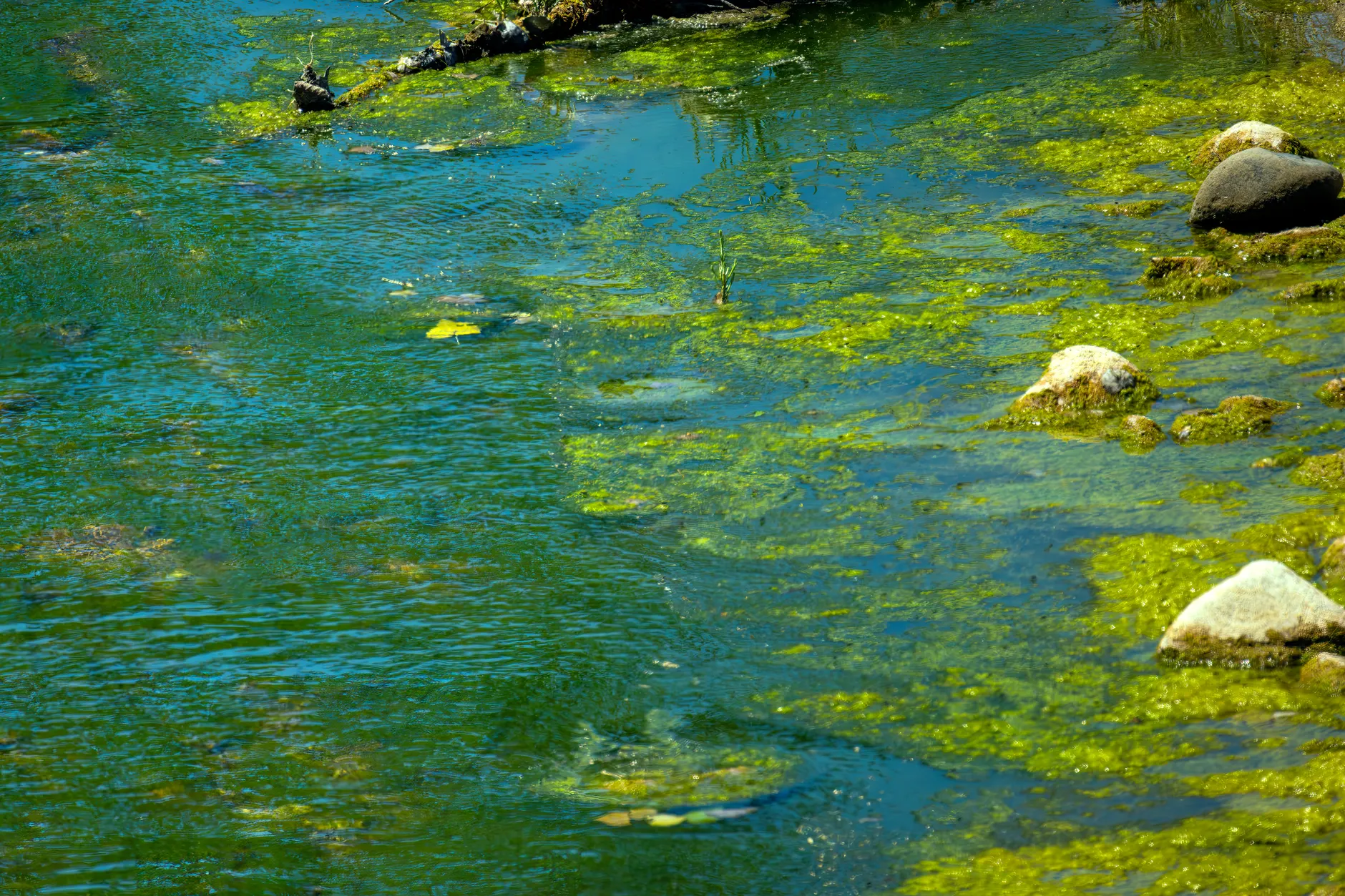
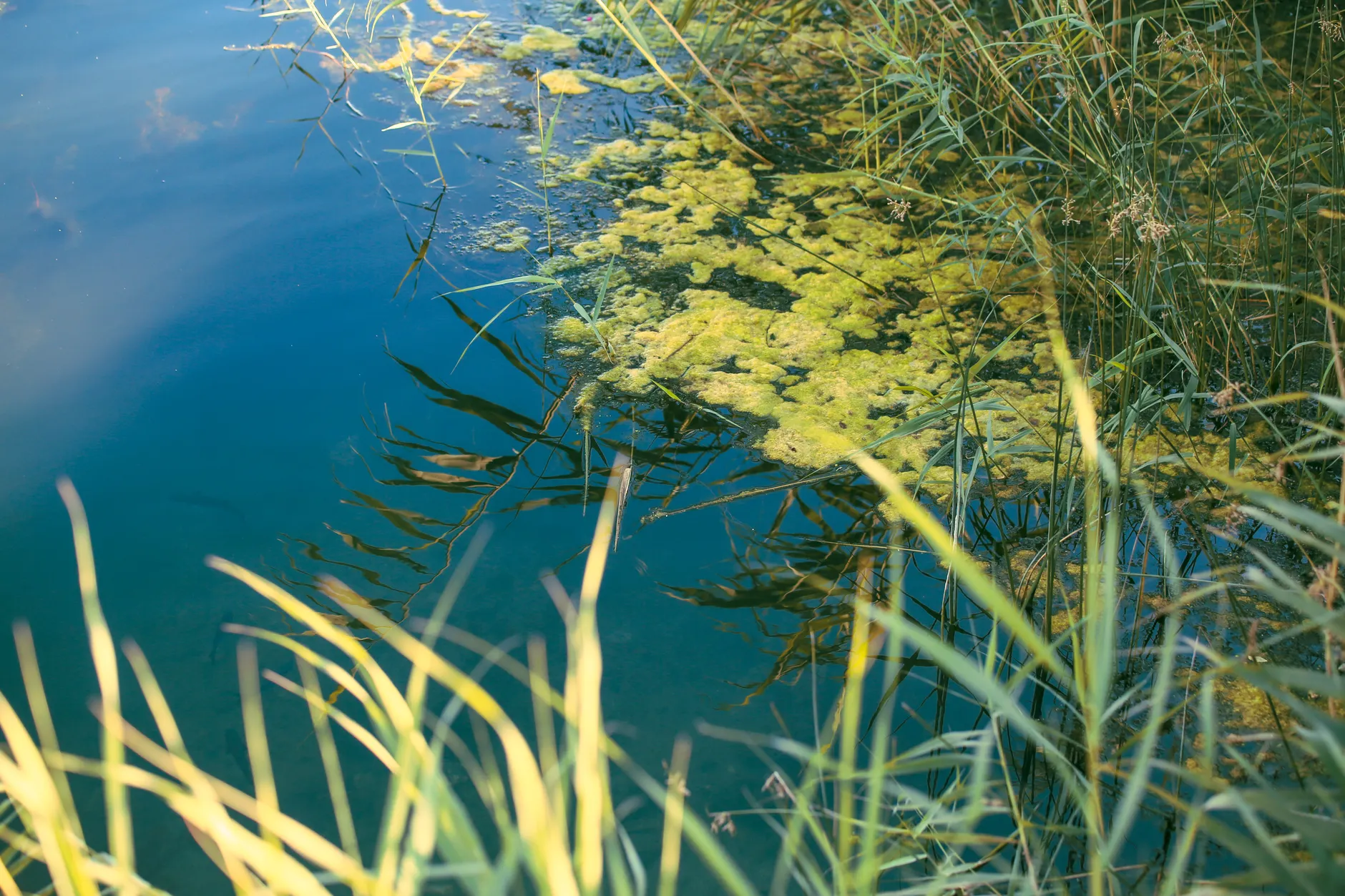
    Blooms may resemble green paint, pea soup, powder, streaks, floating mats or shoreline scum. Not every bloom is obvious, and appearance cannot establish whether toxins are present.

    • Follow official bloom restrictions. Do not swim or let children or dogs contact affected water. Check whether the notice also restricts paddling, boating, fishing or all recreational contact.
    • Stay out of suspected blooms even before a notice appears. Report the location to the park, council or health authority.
    • Do not clear away scum and swim beneath it. Cells and toxins can remain dispersed through the water.
    • Do not assume another part of the shore is unaffected. Wind can move surface accumulations, and a visually clear patch is not a toxin test.

    Dogs can become seriously ill after drinking affected water or licking contaminated fur. Keep them away from suspected blooms and shoreline scum. After accidental contact, rinse them with clean water and contact a veterinarian immediately if exposure is suspected, particularly if vomiting, weakness, tremors, excessive drooling or seizures develop.

    Lake currents, cold water and drop-offs

    A calm-looking lake can still have moving water. Wind, stream inflows, outlets and changes in water density can create currents. Large lakes can also experience a seiche: an oscillation of water caused by wind or atmospheric-pressure changes that can alter currents and water levels.

    • Avoid inflows after rain. Streams, culverts and drainage channels can create strong local currents as well as carry pollution.
    • Stay away from dams, spillways, sluices and intake structures. Obey exclusion zones. An accessible bank does not make nearby water suitable for swimming.
    • Account for wind direction. Offshore wind can push swimmers and inflatables away from land. A straightforward outward swim can become a difficult return.
    • Leave before a storm reaches the lake. Lightning, rising wind, worsening waves and poor visibility are reasons to end the swim.

    Cold water can cause involuntary gasping and rapid loss of swimming control. The US National Weather Service highlights water below 60°F / 15.6°C as particularly dangerous, but cold shock can occur in warmer water too. Warm air and sunshine do not establish the lake’s temperature, and deeper water may be much colder than the surface.

    Lake beds can drop steeply beyond a shallow margin, particularly at quarries, reservoirs and artificial banks. Hidden branches, rocks, fishing line and abandoned structures add injury and entanglement hazards. Never dive into water of unknown depth. Do not jump from cliffs, bridges or rocks unless the authority permits it and the day’s depth, landing area and obstacles have been checked.

    At the shore: make a final decision before entering

    Bring the access and warning information with you, but treat the shoreline check as a fresh decision. A booking does not oblige you to enter if conditions have changed.

    Md Rafatul Islam / Pexels
    1. Read the signs and follow staff instructions. Check for a new closure, red flag or algae notice. If official information conflicts, stay out until the responsible authority clarifies it.
    2. Inspect without entering. Look for scum, unusual colour, discharge, dead fish, debris and strong movement. Report suspected pollution rather than testing it by swimming.
    3. Identify an entry and reachable exits. Prefer a gradual entry. Check for slippery rocks, deep mud, unstable banks and steep steps. Identify an alternative exit if wind changes; do not rely on seeing every underwater obstacle.
    4. Match the swim to the least capable person. Use a competent buddy, keep visual contact and keep non-swimmers under direct supervision. Stay within a designated swimming area where provided. Avoid alcohol and impairing drugs.
    5. Set up assistance before getting in. Tell someone on shore your planned route and exit. Use appropriate flotation: a properly fitted, approved life jacket provides support, while a swimmer’s tow float is not a substitute for one. A phone in a waterproof case does not replace supervision or rescue equipment.
    6. Enter gradually and reassess. Do not jump straight into cold or unfamiliar water. End the swim if anyone becomes cold, tired, confused or distressed, or if wind, visibility or currents worsen.

    Water shoes can reduce some cuts from the shoreline, but they do not protect against deep mud, entanglement or sudden drop-offs. Flotation and wetsuits do not make contaminated, prohibited or rough water suitable for swimming.

    Reduce infection exposure — and know when to seek help

    Swallowing contaminated water can cause gastrointestinal illness. Contact can also contribute to ear, eye, skin and wound infections. Avoid swallowing lake water, supervise children closely and stay out with open wounds, recent surgical wounds or diarrhoea. Young children, older adults, pregnant people and people with weakened immune systems may face greater consequences from some infections.

    After swimming, shower with clean water, wash hands before eating, clean any cuts and wash swimwear. These measures reduce exposure; they cannot make a swim in contaminated water safe.

    Freshwater contaminated by infected animals’ urine can transmit leptospirosis. Follow local health warnings, particularly after flooding, and tell a clinician about freshwater exposure if you become ill.

    In warm freshwater, the CDC also advises precautions against Naegleria fowleri. Infection is rare but usually fatal. The amoeba enters through the nose, not through swallowing water. Avoid forcing water up your nose, use a nose clip where appropriate and avoid disturbing sediment in shallow, hot areas. Routine bacterial results do not establish that this amoeba is absent.

    Seek medical advice for severe or persistent diarrhoea, fever, vomiting, rash or worsening illness after swimming. Breathing difficulty needs urgent assessment. Severe headache, fever, vomiting or a stiff neck after warm freshwater has entered the nose requires emergency care; mention the exposure.

    If someone gets into difficulty

    • Unexpected cold immersion: float on your back if you can, keep your airway clear, control your breathing and signal for help rather than immediately attempting a hard swim.
    • Fatigue or worsening conditions: use available flotation and head for the nearest safe exit, not necessarily the original entry point.
    • A distressed swimmer: alert a lifeguard and call emergency services. Reach or throw flotation from a secure position; do not enter dangerous water impulsively.
    • After a drowning incident: the rescued person needs medical assessment even if they appear to have recovered.
    • Suspected algae exposure: leave the water, rinse exposed skin with clean water and contact health or poison services if symptoms develop.

    The decision to take to the shore

    Choose a permitted, monitored swimming area; read the dated result alongside current warnings; and assess the route, weather and water conditions separately. If access is prohibited, a warning is active or conditions exceed your ability, do not enter. Where water quality is unknown, choose an officially monitored alternative rather than relying on appearance.

    Swimming outdoors is at your own risk. Check the responsible authority’s latest notices, on-site signs and actual conditions before every swim.

  • Can You Swim in a Reservoir? Rules, Risks and Exceptions

    You can swim in a reservoir only where the owner or managing authority expressly permits it. Many reservoirs prohibit swimming to protect drinking-water supplies and keep people away from cold water, submerged structures and operational hazards.

    Open for walking does not mean open for swimming. Public shoreline access and a parking ticket do not authorise a swim. Permitted reservoir swimming may be restricted to a designated beach, a particular season or a paid, pre-booked session.

    The useful distinction is not simply “reservoir versus lake”. It is whether swimming is authorised in that exact part of the water, whether it is open at the time you visit, and what the latest official water-quality information says. A pin on a map is not permission to swim.

    Why do so many reservoirs prohibit swimming?

    Reservoirs are working infrastructure. They may store drinking water, regulate river flows or support other operational uses. A calm surface can conceal equipment, changing flows and steep underwater slopes that have nothing in common with a managed swimming beach.

    Protecting the drinking-water supply

    Drinking-water reservoirs hold raw water before treatment. Swimmers can introduce microorganisms, body oils, sunscreen, litter and other contaminants. Restricting water contact helps protect the source supply; treatment downstream does not remove the need to prevent contamination in the first place.

    Thames Water identifies swimming as a contamination risk at its drinking-water reservoirs. Its restrictions on general swimming include Queen Mary Reservoir near Staines, Surrey. Any specifically authorised organised activity is a separate permission, not an invitation to swim elsewhere in the reservoir.

    The reverse assumption is also wrong: a reservoir supplying drinking water does not contain water ready to drink or necessarily suitable for swimming. Treatment happens before water reaches the tap.

    Hidden structures and changing water levels

    Reservoirs can contain intake towers, pipes, valves, sluices and outlet works. Some also cover old roads, walls, fencing or debris. Poor visibility makes these hazards difficult to judge from the bank.

    • Intakes: water being drawn into infrastructure can create dangerous local flows even when the wider surface looks still.
    • Dams, spillways and outlets: these can involve turbulence, drops and strong currents. They are not swimming areas.
    • Changing levels: operational drawdown can alter the depth over obstacles and expose slippery or unstable ground.
    • Steep banks: an easy slide into the water may leave no practical way to climb out, especially once cold has affected your strength.

    Do not jump or dive into reservoir water. Neither a clear surface nor someone else’s previous jump establishes the depth or shows what lies underneath.

    Limited supervision and difficult rescue access

    A walking route around a reservoir is not a supervised swimming facility. Long shorelines, restricted vehicle access, weak mobile coverage and steep banks can complicate a rescue. Owners may prohibit swimming where they cannot provide suitable supervision or emergency access.

    Why warm weather does not remove the cold-water risk

    Reservoir water does not warm at the same rate as the air. Deep water can remain cold during summer, and a warm surface layer tells you little about the temperature below it.

    Sudden immersion can cause cold shock: an involuntary gasp, rapid breathing and loss of breathing control. This can happen before hypothermia develops. Continued exposure then reduces strength and coordination, making the return swim or climb up a bank harder.

    The Royal Life Saving Society UK advises entering cold open water slowly and avoiding jumping or diving into unknown water. That advice applies only after swimming permission has been established; careful entry does not make a prohibited reservoir suitable for a swim.

    • At an authorised venue, use the designated entry and exit rather than choosing a quieter bank.
    • Follow the operator’s temperature-related restrictions and session rules.
    • Have dry clothing and warm layers ready at the exit. Body temperature can continue falling after you leave cold water.
    • Treat confusion, marked weakness or drowsiness after immersion as reasons to seek urgent help, not simply to wait and warm up.

    Where reservoir swimming can be allowed

    Some reservoirs have designated beaches or managed open-water swimming areas. Permission may cover only a buoyed enclosure, a supervised session or an organised event. It does not automatically extend to nearby coves, boat ramps or the opposite shore.

    Anglian Water’s designated swimming arrangements at Rutland Water in Rutland and Grafham Water in Cambridgeshire illustrate this distinction: access is through the relevant swimming facility, not unrestricted entry around the reservoir. Operating dates, bookings, fees and session requirements belong to the individual venue.

    In the United States, reservoir rules likewise depend on the managing authority. At US Army Corps of Engineers projects, a designated swimming beach does not authorise swimming near dams, spillways or intake structures. Local project rules determine which areas are permitted.

    Managed access may include safety cover, marked boundaries and controlled entry, but provision varies. Check rather than assume that lifeguards, changing facilities or equipment hire are included.

    Check permission, opening and booking separately

    The most important check is the scope of permission. “Watersports allowed” might refer to sailing or kayaking, while “open-water swimming” might mean one booked session rather than all-day access.

    1. Permission → Read the managing authority’s swimming rules → Establish whether swimming is allowed. A public footpath, visitor centre, unfenced shore or other swimmers in the water does not establish permission.
    2. Boundary → Identify the authorised beach or session area → Know exactly where permission applies. Check whether access is public, restricted to members or available only through an approved provider.
    3. Opening → Check the operating calendar and current notices → Establish whether the permitted area is available for your visit. Seasonal operation, weather, algae, reservoir work or staffing can interrupt access.
    4. Booking → Read the session terms → Arrange the required entry and equipment. Check payment, registration, age restrictions, wetsuit or tow-float requirements, and cancellation notices before travelling.

    If a booking confirmation conflicts with a closure sign at the venue, stay out and speak to staff. A reservation does not override an on-site closure.

    In England, public footpaths and countryside access do not themselves create permission to swim. Access laws differ elsewhere, but operational restrictions and swimming-area boundaries still need checking. Do not cross fences, locked gates or restricted dam-access tracks to reach the water.

    What official water-quality information should tell you

    Look for a result tied to the named swimming area, official monitoring programme, sampling date and result, together with any current advisory or closure. A result from another beach on the same reservoir may not describe conditions at your entry point.

    Many reservoirs are not designated bathing waters and do not receive the routine official bathing-water classification applied to designated sites. Drinking-water monitoring serves a different purpose and is not a substitute for recreational-water information.

    • A clear-looking surface is not a test result. It cannot establish microbial quality or rule out toxins.
    • No published result does not mean clean water. It also does not prove that no testing occurs. Distinguish “no dated official result available” from “not officially tested for recreational swimming”.
    • A previous result does not override a new closure. Pollution, heavy rainfall or an algal bloom can change conditions after sampling.
    • Swimming permission and water quality are separate. An authorised beach can close temporarily, while clean-looking water can remain prohibited for operational reasons.

    Blue-green algae, also called cyanobacteria, can produce toxins harmful to people and animals. Follow official warnings against water contact and keep dogs out of affected water. Do not move to another bank to bypass a closure.

    If conditions change or someone gets into difficulty

    At a managed session, alert safety staff immediately. Away from staff, call emergency services early and give the reservoir name, official entrance and exact location. In the UK, call 999 and ask for Fire and Rescue for an inland-water emergency; in the US, call 911.

    Reach or throw suitable flotation from a secure position on shore rather than entering cold, unfamiliar water after someone. A strong swimmer can become a second casualty, particularly near intakes, steep banks or restricted infrastructure.

    A tow float improves visibility during an authorised swim, but it does not provide permission, replace supervision or make operational areas safe.

    The decision before you enter

    Choose an expressly authorised beach or managed session, stay within its boundary and follow its current restrictions. If permission or opening status is unclear, do not enter. Reservoir swimming is not a situation where the absence of a fence or warning should be treated as approval.

    Live-status check: no individual venue has been checked for today’s opening, fees, bookings or water-quality conditions in this general guide. No site-specific official sampling result or sampling date is supplied here.

    Outdoor swimming is at your own risk. Before every reservoir swim, check the operator’s current permission, closure notices, weather and water conditions — even if you have swum there before.

  • Cold Water Shock: The First Minute and How to Enter Safely

    Cold water shock can disrupt breathing and strain the heart within seconds, before hypothermia develops. Gradual entry reduces the sudden exposure, while floating gives someone who falls in unexpectedly time to regain breathing control.

    Enter only at a legally accessible swimming site that is open, and meet any entry-fee or booking requirements. Choose somewhere with an easy entry and exit, check local conditions, and walk in gradually rather than jumping or diving. A pin on a map is not permission to swim.

    If you fall into cold water unexpectedly, float first. Trying to swim immediately can put your airway at risk while your breathing is out of control. The first priority is keeping your mouth and nose above water, not covering distance.

    The RNLI and Royal Life Saving Society UK use water below 15°C (59°F) as a practical cold-water warning threshold. Strong swimmers are affected too. Warm sunshine does not remove the risk: water temperature, not air temperature, determines the cold exposure.

    What happens during the first minute

    Cold water shock is an immediate, involuntary response to rapid skin cooling. Cold receptors trigger the body’s fight-or-flight response before its core temperature has fallen significantly. This is why someone can get into serious difficulty almost as soon as they enter.

    • First seconds: an involuntary gasp. Sudden immersion can trigger a sharp intake of breath. If your face is underwater, that gasp can draw water into your airway.
    • During the first 30-60 seconds: rapid, uncontrolled breathing. Breathing may become much faster and shallower, making it difficult to speak or coordinate swimming. Panic can increase the breathing rate further.
    • At the same time: extra strain on the heart. Blood vessels near the skin constrict, while heart rate and blood pressure rise. This increases cardiac workload and can trigger abnormal heart rhythms, particularly in people with cardiovascular disease.
    • Effective swimming can fail immediately. Gasping, panic and muscle tightening can disrupt coordination even before substantial body cooling occurs.

    The strongest initial breathing response is commonly concentrated in the first minute, but one minute is not a countdown to safety. Breathing may take longer to settle, and continued immersion brings further risks.

    The US National Weather Service distinguishes cold shock from later swimming failure and hypothermia. Continued cooling reduces strength, grip and coordination; hypothermia develops as core temperature falls below 35°C (95°F). You can lose the ability to swim or climb out before becoming hypothermic.

    Plan the entry before you get wet

    A useful cold-water swimming safety plan starts with the exit. A bank that is easy to slide down may be impossible to climb with cold hands. For a first session, an organised swimming venue with supervision and a straightforward shallow entry is a more controlled choice than an unfamiliar river or exposed coast.

    1. 1 → Check access and conditions → Decide whether to enter
      Check permission to swim, opening restrictions, weather, water temperature and the latest official warnings. At the coast, include tides, swell, wind and rip-current warnings. In rivers, check flow and water levels. If conditions prevent a controlled entry or reliable exit, do not enter.
    2. 2 → Choose an easy exit → Avoid a difficult climb later
      Identify a stable beach, shallow bank or suitable ladder before entering. Stay close to it during initial sessions. Do not make reaching the opposite shore your only way out.
    3. 3 → Arrange company and shore support → Make distress easier to spot
      Swim with a buddy or join an organised session, and make sure someone on shore knows the plan. Another swimmer is not a substitute for a rescue plan: they must not put themselves in danger trying to help.
    4. 4 → Prepare equipment and dry clothing → Reduce exposure and delays
      A suitable wetsuit can reduce heat loss, a bright cap improves visibility, and suitable footwear can help at a rough entry. A tow float adds visibility and something to hold, but it is not a lifejacket or certified personal flotation device. Leave dry layers and a towel ready at the exit.
    5. 5 → Walk in gradually with your face clear → Limit sudden immersion
      Use a shallow, stable entry and move slowly. Keep your mouth and nose out of the water while your breathing settles. Do not jump, dive or dunk your head to “get it over with”. If breathing becomes uncontrolled, stop progressing into deeper water and return to shore while you can do so easily.
    6. 6 → Stay near the exit and reassess → Leave before control deteriorates
      Do not begin swimming away from shore until breathing is controlled. Keep an initial exposure brief, and leave if you develop increasing shivering, unusual fatigue, numb or clumsy hands, or difficulty coordinating movement. Do not wait for all these signs to appear.

    There is no universal safe swimming duration. Water temperature, clothing, body size, health, movement and acclimatisation all affect the response. A fixed “minutes per degree” rule cannot tell you how long you can safely stay in.

    A wetsuit does not prevent cold water shock, and an official bathing-water result does not assess it. Microbial water-quality testing is separate from temperature, currents, underwater hazards and rescue access.

    Float to Live if you fall in unexpectedly

    The RNLI’s Float to Live advice addresses the immediate problem: keeping the airway clear while the breathing response settles. Frantic swimming uses energy and can make panic worse.

    1. 1 → Lean back and spread your arms and legs → Support your airway
      Tilt your head back with your ears in the water, keeping your mouth and nose above the surface. Use gentle hand movements if needed to help you float.
    2. 2 → Focus on breathing rather than distance → Regain control
      Resist the urge to thrash or immediately strike out for shore. Allow your breathing to settle. Do not hold your breath to try to suppress the response.
    3. 3 → Call or signal for help → Alert people nearby
      Once able, shout and attract attention. If wearing a lifejacket or buoyancy aid, keep it on and use its intended floating position. Hold a suitable buoyant object if one is within reach.
    4. 4 → Reassess the nearest usable exit → Attempt only a manageable self-rescue
      Swim only when breathing is controlled and you can reach safety without exhausting yourself. If you cannot, continue floating and signalling rather than committing to a long swim.

    If you cannot maintain a float, use a nearby buoyant object or secure support and attract attention. Avoid spending your remaining strength trying to reach a distant or unclimbable bank.

    How to get used to cold water without chasing tolerance

    Repeated, controlled exposure can reduce the size of the initial breathing response. It does not remove the risk of drowning, heart problems, swimming failure or hypothermia. Feeling less shocked is not proof that your body is staying warm.

    The practical aim is to become familiar with controlled entry and an early exit — not to endure progressively worse discomfort.

    1. 1 → Start warmer, shallow and supervised → Keep the exposure controllable
      Choose conditions where you can stand and leave easily. Use a buddy, shore supervision or an organised venue rather than practising alone.
    2. 2 → Repeat brief, controlled sessions → Learn your response
      Pay attention to breathing, hand function and how readily you can exit. Do not extend a session simply because another swimmer stays in longer.
    3. 3 → Change only one exposure factor → Avoid stacking extra demands
      If progressing, do not simultaneously choose colder water, a longer swim and a more difficult location. A familiar entry and exit remain important even when the initial cold feels less intense.

    Do not hyperventilate or practise prolonged breath-holding before entering. These techniques can cause loss of consciousness and drowning. Cold showers also do not reproduce the currents, depth, waves or exit difficulties of open water.

    Get individual medical advice before deliberate cold-water exposure if you have heart disease, high blood pressure, a rhythm disorder, asthma, Raynaud’s disease or diabetes, are pregnant, or take medication affecting circulation. Avoid a session when ill, exhausted or affected by alcohol. Children and inexperienced swimmers need close supervision and a controlled, shallow introduction.

    Leaving the water does not end the cold risk

    Cooling can continue after you get out. Have your warming kit accessible without a long walk or a struggle with small fastenings. Cold fingers can turn an otherwise simple change of clothes into a problem.

    1. 1 → Remove wet clothing and dry off → Reduce further heat loss
      Move out of wind and rain, then put on dry, insulating layers and cover your head.
    2. 2 → Warm gradually and stay accompanied → Notice deterioration
      A warm non-alcoholic drink is appropriate only if you are fully alert and able to swallow normally. Do not give food or drink to someone who is confused, vomiting or unconscious.
    3. 3 → Escalate concerning symptoms → Get emergency care promptly
      Seek urgent help for chest pain, breathing difficulty, confusion, collapse or severe shivering. Do not assume these symptoms will resolve simply because the person is now on land.

    If another swimmer is in difficulty

    Call emergency services: 999 or 112 in the UK, or 911 in the US. Give the location and describe what has happened. From a secure position, use a reach aid or throw a rescue line or buoyant object if available. Do not enter dangerous water without appropriate rescue training.

    Once the person is out, handle them gently, insulate them and monitor breathing. Keep a severely cold or exhausted person horizontal where practical rather than making them stand or walk. If they are unresponsive and not breathing normally, start CPR, including rescue breaths if you are able, and use an automated external defibrillator if available. Follow the emergency dispatcher’s instructions.

    Category: Safety. Guidance reference date: October 2026. Safety guidance: RNLI, Royal Life Saving Society UK and the US National Weather Service. This article does not provide live opening, closure or water-quality information for individual swimming sites.

    The practical rule to remember

    For a planned dip, enter gradually with an easy exit close by. For an unexpected fall, float first and regain breathing control before attempting to swim. Neither experience nor a wetsuit removes the risk. Outdoor swimming is at your own risk; check access, official warnings and local conditions before every swim.

  • River Swimming Safety: Currents, Cold Water and Floods

    River Swimming Safety: Currents, Cold Water and Floods

    A river’s access rules, current, temperature and water quality need separate checks. A calm surface or a familiar swimming spot does not remove the risk of entrapment, cold shock or a sudden rise in flow.

    Status, access and cost come first. Before travelling, check whether your river site is open, seasonal, book ahead, or closed or swimming banned. Confirm that both the route to the bank and swimming itself are lawful, and check any entry fee, permit or booking requirement. A pin on a map is not permission to swim.

    Once access is settled, assess the water and the way out. River swimming safety is not just about being a strong swimmer: current can carry you past an exit, cold can impair breathing and grip, and upstream rain can change conditions while the sky above you stays clear.

    The before-entry checklist

    Complete these checks before changing or entering. If a critical check cannot be completed — particularly permission, flood conditions or a usable exit — choose another activity rather than entering to investigate.

    1. Check the exact site’s rules. Use the park, council, access authority or landowner’s information. Read signs at the entrance as well: they may be newer than an online page. Do not cross private land, fences or a closed route to reach the river.
    2. Check today’s warnings and upstream conditions. Look for closures, pollution alerts, flood warnings, rising river levels and reservoir-release notices. Check rainfall across the upstream catchment, not only the forecast at the swimming point.
    3. Identify your entry, exit and downstream hazards from land. Look for a stable, unobstructed bank or gravel bar you can reach without crossing strong flow. Identify a backup exit. Do not enter if a missed exit would carry you towards a weir, culvert, fallen tree or inaccessible bank.
    4. Check water quality for this reach. Read the exact site’s official result and sample date, together with any current advisory. A result from a nearby beach or another stretch of river does not describe your swimming point.
    5. Set a companion and emergency plan. Swim with another competent adult, tell someone on shore your intended route, and record the nearest road, bridge or park entrance. Keep a phone accessible in a waterproof case where there is a signal.

    Record the authority and date and time of your status checks. An old “open” notice does not establish today’s conditions. In the UK, relevant checks may involve the Environment Agency, Natural Resources Wales, the Scottish Environment Protection Agency or the site manager. In the US, use the park or land manager, local health authority, National Weather Service and local emergency-management service.

    Access rules also differ by location. England’s Countryside and Rights of Way Act 2000 does not create a blanket right to swim in inland waters. Scotland has broader responsible access rights under the Land Reform (Scotland) Act 2003, but restrictions and safety exclusions still matter. In the US, a public river does not automatically provide public access across its banks.

    Currents: inspect the route, not just the surface

    A smooth surface can conceal strong flow. Water commonly accelerates where a channel narrows, steepens or passes an obstruction. Around bends, faster flow often follows the outside bank; an inviting inside-bend gravel beach can still end in a sudden drop-off.

    There is no universal current-speed or river-gauge reading that makes a swim safe. The same reading can mean different conditions at different access points because channel shape, depth, obstructions and exits vary. Use gauges to understand the trend and official warnings, not as a stand-alone permission to enter.

    • Stay away from weirs and low-head dams. Water can look smooth above the crest while recirculating flow below holds a person underwater. Do not swim towards the structure or try to climb onto it.
    • Avoid strainers. Fallen trees, roots, fencing and other debris let water pass through but can pin a swimmer against them.
    • Avoid undercut banks and artificial openings. Banks can conceal submerged cavities or collapse. Culverts and narrow openings concentrate flow.
    • Do not rely on shallow water. A foot can wedge between rocks while the current pushes the body downstream. Walking across a fast channel is not a safer substitute for swimming it.

    Plan the return before swimming out. A short outward swim can become a difficult return against current, especially after cooling or fatigue. For an unfamiliar river, use daylight and favour a managed swimming area with a straightforward entry and exit rather than an open-water route with uncertain escape points.

    If swept downstream: keep your feet up, with feet pointing downstream and toes towards the surface, while steering towards a clear, reachable bank. Do not exhaust yourself swimming directly against the flow; move diagonally towards an accessible exit. Do not stand until the water is shallow and slow enough to do so without foot entrapment. Never try to swim beneath a strainer.

    yohannes Photographer / Pexels

    Cold water: breathing can fail before you feel hypothermic

    Sudden cold-water immersion can cause involuntary gasping, rapid breathing and loss of swimming control. This cold-shock response happens before hypothermia develops and does not require near-freezing water. A warm afternoon is not evidence of warm river water.

    Use a controlled entry rather than jumping in. Enter gradually at the chosen access point and keep the exit close. If gasping or rapid breathing starts, stop trying to swim hard, keep your airway clear and float on your back if needed while breathing settles. Leave the water as soon as you can do so safely.

    • Keep a first immersion short and close to the exit. There is no universal safe number of minutes: temperature, clothing, exertion and individual response all matter.
    • Leave before coordination deteriorates. Weak grip, clumsy movement or difficulty climbing out are serious problems beside a slippery riverbank. Do not wait for severe shivering.
    • Treat a wetsuit as insulation, not protection from current. It does not make a weir, strainer or fast channel suitable for swimming.
    • Prepare dry clothing before entering. Put a towel, insulating layer and footwear where you can reach them without a long, uneven walk.

    Cooling can continue after leaving the river. Remove wet clothing, dry off and insulate yourself. A warm non-alcoholic drink is appropriate if you are fully conscious and able to swallow. Confusion, drowsiness, slurred speech or a worsening condition require urgent medical help. Alcohol is not a warming strategy.

    Rope swings: popularity is not an inspection

    An informal rope swing adds several failure points before you even reach the water: the branch, attachment, knot, rope, handle and swing arc. Looking from the bank cannot certify that an unknown swing will hold. Repeated use does not establish landowner approval or structural inspection.

    Our recommendation is a controlled entry from an authorised access point instead. It removes rope failure and swing-arc collision from the decision, although the river’s current, cold and underwater hazards still need checking.

    • Do not use an improvised swing with unknown inspection and maintenance. Visible fraying, damaged fibres, loose attachments or a moving branch are additional reasons to stay off it.
    • Do not use a swing after rainfall or flooding. Flow, depth, submerged debris and the attachment point may all have changed.
    • Never dive into unfamiliar river water. Feet-first entry does not make an unknown landing safe either. Permission, current conditions, landing depth and an unobstructed exit all matter.
    • At an authorised, managed feature, follow the operator’s restrictions. Keep the landing area clear and never wrap a rope around your hand, arm, neck or body.

    A pool that was deep on a previous visit may now contain deposited gravel, a log or exposed rock. Do not jump in to find out. Report a damaged swing or attachment to the landowner or managing authority.

    Patrick / Pexels

    Flash floods: upstream weather matters most

    Rain several miles upstream can raise a river after local skies have cleared. Narrow channels and gorges concentrate that flow and can leave few escape routes. Reservoir releases can also change water levels without local rainfall.

    Do not enter during or after heavy rain. Check official flood warnings, river-level trends and relevant release notices before leaving home. A rising gauge is a reason to reconsider, not a challenge to fit in a quick swim.

    • Leave immediately if water rises or changes colour. Floating branches, a new upstream roar, new foam lines or debris collecting against a bridge are also warning signs.
    • Move to high ground. Do not delay to collect clothing, bags or a vehicle. Know the escape route before entering the channel.
    • Do not cross floodwater on foot or by car. Hidden holes, fencing, unstable surfaces and powerful flow make apparent depth unreliable.
    • Keep away from low crossings, culverts and flood-affected bridges. Debris can block openings and water can undermine approaches.

    There is no fixed waiting period after a storm that makes every river suitable for swimming. Levels, pollution and bank damage recover at different rates. If a site was closed, wait for the responsible authority to reopen it, then check current conditions again. Clear-looking water after a flood does not rule out contamination or a changed riverbed.

    Water quality: use the exact site’s dated official information

    Check both the latest official result and any newer pollution advisory or closure. Record the monitoring authority, exact site, sample date and alert date. A bathing-water classification describes monitored microbiological quality; it does not assess the current, temperature or your ability to get out.

    England’s designated bathing-water programme does not cover every river swimming location. In the US, the EPA beach programme primarily covers coastal and Great Lakes recreational waters; river monitoring may instead sit with a state, tribal, county, park or local-health programme.

    Where the exact reach has no official monitoring, describe it as “not officially tested”. Where monitoring exists but a current result is unavailable, do not substitute an older result or a nearby site’s result as a same-day clearance. Home dip tests, clear water and a busy bank do not replace official monitoring or closure notices.

    • Stay out if you see sewage indicators or suspect algae. Toilet paper, foul odour, visible discharge, unusual scum, dead fish or an official cyanobacteria warning are reasons not to enter. Keep dogs away from suspect algal water.
    • Avoid swallowing river water. Bacteria, viruses and parasites can cause illness even when the water looks clean.
    • Avoid swimming with fresh wounds. Cover minor cuts with waterproof dressings.
    • Seek medical advice after suspected exposure if symptoms persist or are severe. Mention the river swim if you develop vomiting, diarrhoea, fever, abdominal pain, rash, eye irritation or breathing difficulty.

    Equipment that helps — and what it cannot do

    For moving-water activity, use a correctly fitted, approved life jacket or buoyancy aid appropriate to the activity, with the training needed to use it. Neither buoyancy nor protective clothing makes hazardous flow suitable for an untrained swimmer.

    Abhay Yadav / Pexels
    • Secure footwear: choose fastening that stays on and soles that protect against sharp debris. Footwear does not prevent foot entrapment.
    • Accessible communication: carry a phone in a tested waterproof case and a whistle. Do not bury the phone beneath clothing in a dry bag.
    • Visible clothing: high-contrast swimwear helps companions locate you. A tow float is a visibility aid, not a life-saving device; trailing tethers can snag in moving water.
    • Dry supplies: pack insulating layers, a towel, food, drinking water and a first-aid kit for a delayed exit.
    • No loose beach inflatables: current can carry them beyond the exit or into an obstruction. Never enter the river to recover one.

    Avoid alcohol and recreational drugs before swimming. Keep children within arm’s reach, but do not treat adult proximity as protection from strong current: choose water and access arrangements appropriate to the child, preferably a supervised swimming setting.

    If someone gets into difficulty

    Call 999 in the UK or 911 in the US. Give the river name, precise access point, last known position, direction of travel and visible clothing. Mention downstream hazards such as a weir or fallen tree. Send someone to meet rescuers at the nearest road or gate if enough people are present.

    Use the bank-rescue principle “reach or throw, don’t go.” From a secure position, extend a suitable object or throw flotation without entering the current. Rescue ropes require training: a poorly handled line can entangle the swimmer or rescuer. Do not form a human chain or jump in after the casualty.

    Once the person is out, monitor breathing and consciousness, shelter them and prevent further cooling. If they are unresponsive and not breathing normally, follow the emergency dispatcher’s CPR instructions and use an automated external defibrillator if available.

    The decision at the bank

    Enter only where access is lawful, swimming is allowed, current warnings have been checked and a usable exit is clear. Skip improvised rope swings, stay away from weirs and strainers, and leave at the first sign of rising water or declining coordination.

    Outdoor swimming is at your own risk. Check official notices, upstream weather, water levels and conditions at the bank immediately before every swim.

  • Blue-Green Algae: How to Spot It and When Not to Swim

    Blue-Green Algae: How to Spot It and When Not to Swim

    Blue-green algae can produce toxins, and appearance alone cannot tell you whether a bloom is toxic. Avoid suspected blooms and follow official warnings to protect swimmers, children and dogs.

    Do not swim where there is a blue-green algae warning or suspected bloom. Keep out of water with unexplained scum, mats, foam or strong discolouration, and keep children and dogs away from the affected shoreline. Legal public access, a paid entry ticket or an open park does not override a swimming restriction.

    The important distinction is between spotting a reason to stay out and proving that water is safe. You can recognise warning signs from the bank, but you cannot identify cyanobacterial toxins by sight or smell. A clear-looking patch beside a bloom is not a reliable alternative swimming area.

    What blue-green algae is

    Blue-green algae is the common name for cyanobacteria: bacteria that use sunlight to grow. They occur in fresh water, brackish water and some marine environments. Despite the name, they are not true algae.

    A bloom is an excessive concentration of algae or cyanobacteria. It can collect at the surface or spread through the water beneath it. Lakes, reservoirs, ponds, rivers and coastal waters can all be affected.

    Some cyanobacteria produce cyanotoxins, including microcystins, cylindrospermopsin, anatoxin-a and saxitoxins. Depending on the toxin and exposure, these can affect the skin, digestive system, liver or nervous system. Not every bloom produces toxins, but that distinction cannot be made reliably from the bank.

    How to spot a suspected bloom

    Look across the surface and along the shoreline before approaching the water. Wind can concentrate floating material against one bank, while sheltered coves can collect dense scum. Do not enter the water or handle the material to investigate it.

    • Paint-like streaks or slicks: material that resembles spilled paint, sometimes gathered into swirls or bands.
    • Pea-soup water: unusually dense, coloured water rather than a distinct surface layer.
    • Floating flecks: particles resembling grass clippings or small clumps suspended in the water.
    • Mats, scum or foam: accumulations at the edge, around vegetation or in sheltered corners.
    • Unexpected colours: green, blue-green and turquoise are possible, but so are yellow, brown, red and white.

    A musty, earthy or septic-like smell can accompany a bloom. No smell does not mean no toxin. Some blooms have little or no noticeable odour, and material dispersed below the surface may be difficult to see.

    Can you distinguish it from ordinary algae or pollen?

    Duckweed, pollen, sediment and other algae can resemble a cyanobacterial bloom. These visual clues explain the overlap; they are not a swimming-clearance test.

    Engin Akyurt / Pexels
    What you see What it might be What it cannot tell you
    Many small, separate floating green leaves Duckweed Whether cyanobacteria are also present beneath or beside it
    A yellowish, dusty surface film Pollen, particularly in sheltered margins Whether the film is harmless without reliable identification
    Stringy or hair-like green growth Filamentous green algae Whether all material in the mat is the same organism
    Brown or cloudy water after rain Suspended sediment Whether a separate cyanobacterial hazard is present
    A paint-like slick, pea-soup appearance or dense coloured scum A possible cyanobacterial bloom Which toxins are present or their concentration

    Reliable identification and toxin measurement require appropriate field or laboratory testing. If you cannot explain unusual scum, mats, foam or discolouration, stay out and report it to the responsible authority. Do not use touching, stirring or smelling the material as a home test.

    When not to swim, paddle or wade

    • There is an official warning. Follow “do not swim”, “avoid contact”, harmful-algal-bloom and closure notices. Where notices differ, follow the most restrictive applicable instruction.
    • You can see a suspected bloom. Stay out even if an online alert has not yet appeared. Authorities may not have inspected or sampled the location.
    • A recent warning has no published cancellation or reopening notice. A missing sign or clearer shoreline does not cancel it.
    • There are dead fish or unusually distressed wildlife. These can accompany harmful blooms, although their absence does not rule one out.

    Avoid activities that put you in contact with affected water or spray. Wading is not a safe compromise, and moving a short distance along the same shore does not establish that you have left the affected area.

    Do not drink bloom-affected water or use it for cooking, brushing teeth, making ice, washing food or filling a paddling pool. Boiling does not reliably remove cyanotoxins and can concentrate some of them. Advice about treated drinking-water supplies is separate from advice about swimming water.

    Where to find official blue-green algae alerts

    Check the exact water body on the day you plan to swim, then read signs at the entrance and water’s edge. A regional update, an old swimming guide or a social-media photograph does not establish the current status of a particular lake, river or cove.

    Location Official places to check Important limit
    England Environment Agency blue-green algae information; the relevant council, park authority, landowner or water company Designated bathing-water results do not mean every inland swimming location is routinely tested for cyanobacteria.
    Wales Natural Resources Wales blue-green algae information; local authorities and site operators Check the individual site’s warning or closure notice, not only a wider-area update.
    Scotland Scottish Environment Protection Agency environmental information; councils, landowners and site operators Location-specific access restrictions and warning signs still apply.
    Northern Ireland Department of Agriculture, Environment and Rural Affairs; Northern Ireland Environment Agency; councils and site operators Check the named water body and any local contact restrictions.
    United States State or tribal health and environmental agencies, county health departments, park agencies and lake managers Responsibility varies by location; there is no single nationwide inland-lake clearance system.
    US coastal and Great Lakes beaches EPA’s Beach Advisory and Closing On-line Notification system, known as BEACON 2.0, alongside local beach notices BEACON does not cover every inland lake or river.

    In US national parks, also check the individual National Park Service park’s alerts and safety notices. An open park does not necessarily mean every swimming area is open or monitored.

    For a useful site check, note the issuing authority, notice date, affected area, latest sample date and the date you checked. Distinguish an advisory from a closure, and read what activities each notice restricts.

    David Brown / Pexels

    This guide does not provide live site statuses or current water-quality results. Where a location has no official routine cyanobacteria testing, treat it as unmonitored — not tested and clear. A pin on a map is not permission to swim; legal access and swimming permission need a separate check.

    Why a good bathing-water rating is not enough

    Routine bathing-water classifications and cyanobacterial toxin results measure different hazards. A favourable bacterial water-quality rating does not establish that a lake is free of cyanobacteria or their toxins.

    Even a cyanotoxin result represents a particular sampling place and time. Wind, mixing and changing bloom growth can alter conditions elsewhere or after sampling. Check what was tested, where the sample was taken and its date — not just whether a result is labelled acceptable.

    The US Environmental Protection Agency published recommended recreational cyanotoxin criteria in 2019, and the World Health Organization’s recreational-water guidelines were published in 2021. These support authority-led risk management; they are not a universal pass-or-fail test for swimmers. Follow the current local advisory rather than trying to overrule it with a result from another jurisdiction.

    Why children and dogs need extra protection

    Children are more likely to swallow water while playing and can take in a larger dose relative to their body weight. Shoreline play also puts them close to concentrated scum. Keep them away from suspected bloom material rather than allowing a shallow paddle. There is no universal safe splash distance from a bloom.

    Dogs can drink affected water, swallow mats and lick contamination from their coats after leaving the water. Poisoning can cause vomiting, diarrhoea, drooling, weakness, stumbling, tremors, seizures, breathing problems, liver failure and death.

    Gülru Sude / Pexels
    • Keep dogs on a lead near a suspected bloom and away from shoreline mats, foam, dead fish and affected puddles.
    • Bring clean drinking water and a bowl. Do not rely on a clear-looking lake or river as a drinking source.
    • If a dog enters suspected bloom water, prevent licking and rinse its coat and paws promptly with clean tap water.
    • Contact a vet urgently if poisoning is suspected or any illness develops. Tell the vet about the possible cyanobacteria exposure.

    What to do after possible exposure

    Exposure can occur through swallowing water, breathing in droplets, or contact with skin and eyes. Symptoms can include rash, itching, eye or throat irritation, nausea, vomiting, stomach pain and diarrhoea. Some toxins can cause more serious liver or neurological effects.

    1. Leave the water. Keep other people and animals away from the suspected bloom.
    2. Rinse with clean fresh water. Wash exposed skin and hair, remove contaminated clothing and wash it before reuse. Flush irritated eyes with clean water without rubbing them.
    3. Seek medical advice for symptoms or suspected ingestion. Contact a local poison centre, medical service or NHS 111 where available. Do not induce vomiting unless a medical professional instructs you to.
    4. Use emergency services for severe symptoms. Breathing difficulty, seizures, collapse, confusion or severe weakness require emergency care.
    5. Record and report the exposure. Note the water body, exact location, date, time, type of contact and symptoms. Photographs taken from dry land can help the environmental-health, public-health, park or water authority investigate.

    When can you swim again?

    There is no universal waiting period after a bloom. Toxin persistence varies with the organism, toxin and environmental conditions. Wind or rain can disperse visible scum without establishing that the water is suitable for swimming.

    Where an official warning was issued, wait for the responsible authority’s published cancellation or reopening decision. Check that it covers the intended swimming area, then inspect the shoreline again on arrival. Fresh signs of a suspected bloom are a reason to stay out even after an earlier reopening.

    Warm, sunny weather, slow-moving water and nutrients from runoff favour bloom development. These conditions help explain when to be particularly alert, but they are not a forecast: blooms can recur, move or become less visible, and rain alone does not make a site clear.

    The swimming decision

    Visible suspected bloom or official warning: stay out and keep children and dogs away. Clear-looking water alone is not clearance; check legal access, the latest dated official notice and any available cyanobacteria result.

    Swimming outdoors is at your own risk. Check current notices and conditions before getting in, and do not swim if a suspected bloom is present.

  • Check Water Quality Before Swimming: US and UK Guide

    Use EPA BEACON and local advisories in the US, and the relevant national regulator in the UK. Read dated samples, current warnings and annual classifications separately: they describe different things, and none guarantees conditions at the moment you enter.

    An “open” water-quality status is not permission to swim. Check legal access, opening hours and any fee or booking requirement with the land manager first. A monitored beach can still have a swimming ban, while an accessible river pool may have no official water-quality testing.

    Category: Safety. This guide explains how to find and interpret official information, rather than providing live conditions for individual swimming spots. Our approach is to keep three checks separate: permission to swim, evidence about water quality, and current conditions.

    Start with the authority responsible for your location

    There is no single live database covering every natural swimming spot in either country. In the US, EPA BEACON 2.0 is a starting point for participating coastal and Great Lakes beaches. In the UK, use the regulator for the nation you are visiting — not England’s service for a Scottish or Welsh beach.

    LocationOfficial service or authorityCoverage and current checks
    United StatesEPA BEACON 2.0; state, territorial and tribal beach programmesParticipating coastal and Great Lakes beaches. Check the responsible health department or park for current restrictions and inland sites.
    EnglandEnvironment Agency Bathing Water Quality service through GOV.UKDesignated bathing waters. Read the classification, dated samples and any current pollution-risk advice.
    WalesNatural Resources Wales bathing-water informationDesignated Welsh bathing waters. Check current notices and local signs as well as the classification.
    ScotlandScottish Environment Protection Agency (SEPA), Scottish bathing waters serviceDesignated Scottish bathing waters, with classifications and pollution-risk information where provided.
    Northern IrelandNorthern Ireland Environment Agency and DAERA bathing-water informationDesignated Northern Irish bathing waters. Check dated results and current local restrictions.

    Before searching, identify the exact beach, park or access point, its state or UK nation, and the waterbody. Similar names and nearby sampling points are easy to confuse. A result for one beach does not automatically describe the next beach along the coast or another entry point on the same lake.

    United States: use BEACON, then check local advisories

    EPA BEACON 2.0 holds beach advisories, closures, monitoring results and programme information supplied by participating state, territorial and tribal agencies. EPA does not individually test every sample in the database. The responsible local programme remains the authority for emergency changes and current restrictions.

    1. Find the matching beach record. Narrow the search by state and beach name, using monitoring and advisory or closure status where available. Match the county, waterbody and beach — not just the map marker.
    2. Read the latest dated monitoring result. Note the collection date, sampling point, bacteria indicator, measured value, units and the programme’s applicable threshold. Check whether the record carries an advisory or closure.
    3. Check the responsible agency’s current notices. Look for state or county beach advisories, sewage-spill alerts, park restrictions and reopening notices. A newer local closure takes precedence over an older clear database entry.
    4. Check the sampling schedule and recent events. Sampling is periodic, not continuous. Heavy rain, runoff or a sewage incident may change conditions after the most recent sample.
    5. Read the signs at the access point. Do not enter against a posted closure or warning because an online record shows no restriction. Emergency signs can appear before a database updates.

    For repeat visits, keep the local agency’s advisory page alongside the BEACON record. That saves time and avoids treating the national database as the only source of same-day information.

    Understand US bacteria results and status labels

    US beach water quality programmes commonly monitor Enterococcus and, in some freshwater programmes, E. coli. These are fecal-indicator bacteria used to assess contamination associated with sewage, runoff, wildlife and other sources.

    Read a number with its units, sample method and local threshold. For example, CFU/100 mL means colony-forming units per 100 millilitres. Do not apply a number found in another state’s guidance to your beach: operational thresholds and decision rules vary by jurisdiction.

    • Open or no advisory: the latest available agency information shows no posted restriction at that time. It is not a guarantee that conditions have remained unchanged.
    • Advisory: the authority recommends avoiding water contact because of an identified or suspected risk. Follow that advice.
    • Closure: swimming or water contact is prohibited under the responsible authority’s order. Follow its reopening notice before returning.

    An advisory may be based on more than one laboratory result. Agencies can also act on rainfall, sewage-spill reports, predictive information or other evidence before a routine sample becomes available.

    UK: read the annual grade and today’s warning separately

    In England, the Environment Agency’s official bathing-water service provides profiles, results and classifications for designated coastal and inland bathing waters. Its principal microbiological indicators are E. coli and intestinal enterococci.

    The annual classification normally uses a rolling four-year assessment period. It describes longer-term bathing-water quality, not the condition of the water immediately before your swim. An Excellent site can still carry a short-term pollution warning.

    England classificationMeaningPractical interpretation
    ExcellentThe highest long-term classification.A strong historical result, but still check current pollution advice and signs.
    GoodMeets the classification standard below Excellent.Not a same-day clearance; current warnings remain important.
    SufficientMeets the minimum classification standard.A weaker long-term microbiological record than Good or Excellent.
    PoorFails the minimum annual classification standard.The Environment Agency advises against bathing. Check separately for any legal restriction.

    These categories are statistical assessments, not simple pass-or-fail labels for an individual sample. Coastal and inland classification thresholds also differ. Do not turn one low bacteria count into an unofficial upgrade or compare it directly with a US advisory threshold.

    1. Open the exact site in the correct national service. Confirm the beach or inland bathing-water name and sampling location.
    2. Read the classification year and available sample dates. Keep the annual grade separate from the latest individual measurement.
    3. Read the bathing-water profile. In England, this identifies potential pollution sources, the sampling point and local pollution-response information.
    4. Check current pollution-risk advice and local notices. A current warning matters even when the annual grade is Excellent or Good.
    5. Check the monitoring season and arrival signs. Do not assume routine sampling continues throughout the year or that an older result describes today’s conditions.

    Use Natural Resources Wales, SEPA or Northern Ireland Environment Agency/DAERA for their respective nations. Their publication pages, warning systems and sampling information can differ; an Environment Agency result for England does not apply across the UK.

    Keep the sample date, warning date and check date separate

    The date you open a page is not the date the water was tested. Laboratory processing and publication create a gap between collecting a sample and displaying the result. A recently updated page may still contain an older sample.

    For a useful record of your check, save these details:

    • Site and sampling point: the exact location the result describes.
    • Official authority: the regulator, health department, park or land manager publishing the information.
    • Sample collection date: when the water was collected.
    • Publication date: when the result appeared, if shown.
    • Current warning: its issue date and any reopening or expiry information.
    • Last checked: the date, and time where useful, when you reviewed the official information.

    If sharing a result with other swimmers, include those dates. “Checked today” does not make a sample collected weeks earlier a same-day test.

    Resolve missing results, rain and conflicting information

    No BEACON record: ordinary inland rivers, lakes, springs, quarries and swimming holes are generally outside the federal coastal and Great Lakes beach programme. Check the state or county health department, park authority or land manager for separate monitoring and restrictions.

    No UK bathing-water record: a non-designated river pool, tarn or waterfall pool may have no routine bathing-water monitoring. Check the relevant regulator and site manager. Absence from the bathing-water service is not a clean result.

    No dated official result located: use the wording “No official dated water-quality result found.” That is different from saying no testing programme exists. If the responsible authority states that it does not test the location, say plainly that there is no official testing programme.

    Heavy rain since the last sample: check runoff, sewage and pollution notices again. Rain can increase contamination through stormwater and sewer overflows. Follow the local authority’s avoidance period or reopening advice rather than assuming a fixed waiting time applies everywhere.

    A clear result conflicts with a newer warning: follow the current restriction. If a posted closure conflicts with an online reopening message, stay out and ask the responsible authority to resolve the discrepancy. Report conflicting or outdated information to the site manager.

    Only a nearby beach has results: do not transfer them to your entry point. Tributaries, outfalls, currents and other pollution sources can make conditions different over a short distance.

    Know what routine water-quality testing leaves out

    Routine fecal-bacteria monitoring does not rule out harmful algal blooms, chemical contamination or every other cause of illness. EPA guidance advises avoiding contact with water affected by harmful algal blooms and keeping people and animals away from visibly discoloured, scummy, foamy or foul-smelling water.

    Clear-looking water is not proof of low bacteria levels, either. Use appearance as a reason to stay out when something is wrong — not as a replacement for official results and warnings.

    Water-quality records also say nothing about cold-water shock, currents, tides, submerged obstacles, entanglement or boat traffic. Check those hazards separately with the site manager, local conditions and weather information.

    Before you enter

    Identify the exact access point, establish permission to swim, then read the dated official result and newest warning. Record access separately as open, seasonal, book ahead, closed or swimming banned, including any fees or reservations. A pin on a map is not permission to swim.

    Swimming outdoors is at your own risk. Recheck official notices and on-site signs, and check weather, water conditions and physical hazards before every swim.

  • Brain-Eating Amoeba: Safer Lake and Hot Spring Swimming

    Naegleria fowleri can cause a rare, almost always fatal brain infection when contaminated warm freshwater enters the nose. Preventing nasal exposure is the main precaution; clear water and normal beach bacteria results do not rule out the amoeba.

    Category: Safety. In warm lakes and natural hot springs, keep water out of your nose and avoid diving or jumping in. Use only places with legal public access and permission to swim. Check the site’s current opening status, closures, fees and booking requirements before travelling: permission to enter is separate from the health risks of entering the water.

    The practical distinction is not whether the water looks clean. It is whether untreated warm freshwater can enter your nose. A gentle soak with your head above water creates a different exposure situation from diving, underwater swimming or being thrown off a water toy — but none of those choices overrides an official closure.

    What is the brain-eating amoeba?

    Naegleria fowleri is a microscopic amoeba found in soil and warm freshwater. It can cause primary amebic meningoencephalitis, or PAM, when contaminated water enters the nose. The organism can then travel along the nerves associated with smell to the brain, causing destructive inflammation.

    According to the US Centers for Disease Control and Prevention (CDC), swallowing water containing the amoeba does not cause PAM. It does not infect through intact skin, and person-to-person transmission has not been documented. This is a nasal-exposure hazard, not an infection passed between swimmers.

    Naegleria fowleri is also different from Acanthamoeba, another amoeba that can cause different illnesses, including keratitis, an eye infection. Advice about one organism should not be treated as interchangeable with advice about the other.

    How big is the risk in lakes and hot springs?

    PAM is exceptionally rare, but its consequences are severe. CDC surveillance recorded 164 US cases from 1962 through 2023, with four survivors. CDC describes the infection as “almost always fatal.” Those figures include recreational water, drinking-water systems and other exposures; they are not a count of infections acquired only through lake swimming.

    These numbers cannot be converted into a reliable personal probability for one swim. Nasal water entry, water conditions and the type of activity vary, and there is no validated per-swim risk calculator.

    The main recreational setting is warm freshwater: lakes, ponds, rivers, canals and natural hot springs. Hot weather, shallow warm margins, low flow and sediment are relevant conditions. CDC reports that most US cases occur from July through September, but cases have also occurred in northern states. A northern location is not a reason to ignore warm-freshwater precautions.

    There is no useful visual check. Clear water can contain the amoeba, and neither smell nor taste can identify it. Cooler, faster-moving water is less favourable to the organism than warm, low-flow water, but that comparison is not a guarantee that a particular site is free of it.

    How lakes, hot springs and treated venues differ

    SettingMain concernPractical response
    Warm freshwater lake or pondUntreated water entering the nose during diving, jumping, underwater swimming or splashing.Keep your head above water, avoid forceful submersion and use a nose clip to reduce nasal exposure.
    Warm river or canalNasal exposure during falls or water sports, including in warm, slow-moving margins.Do not assume moving water removes the risk. Avoid activities likely to force water up your nose.
    Natural hot springWarm untreated water, including areas where spring water cools or mixes with other freshwater.Keep your head above water. Follow access rules, health notices and temperature warnings; do not dive or jump.
    Properly disinfected and maintained pool or spaA different setting from untreated natural water; maintained disinfection prevents the organism from surviving.Choose an operating venue with maintained treatment and follow any closure or maintenance notice.
    Inadequately disinfected pool or recreational water venueInsufficient disinfection can allow contaminated water to present a risk.Do not use a venue closed for treatment problems or assume an artificial pool is automatically protected.

    Reduce nasal exposure in warm freshwater

    Not entering warm untreated freshwater avoids that recreational exposure. If you choose to enter a permitted site, CDC’s prevention advice focuses on keeping water out of the nose and avoiding sediment disturbance.

    • Keep your head above water. Avoid underwater swimming and deliberate head immersion in warm freshwater. Closing your mouth does not protect your nose.
    • Avoid diving, jumping and forceful splashing. These activities can drive water into the nose. CDC recommends holding the nose shut or using a nose clip when jumping or diving into freshwater; avoiding those activities removes that particular source of forceful exposure.
    • Use a well-fitting nose clip as an additional precaution. A clip can slip or leak, especially during a fall or vigorous activity. It does not make warm freshwater risk-free.
    • Do not dig into or churn up shallow sediment. The organism can live in mud and sediment. Avoid activities that stir the bottom around your face.
    • Keep children’s heads out of warm freshwater. Diving games, underwater play and forceful splashing can defeat a plan to keep noses dry. Supervise closely rather than relying on a clip alone.
    • Obey every closure or health advisory. A nose clip is not a workaround for a closed beach, restricted spring or swimming ban.

    Goggles and ear plugs do not protect the nasal route. There is also no CDC-recommended consumer tablet, nasal spray or rinse that makes swimming in a lake or hot spring safe from Naegleria fowleri.

    Hot springs need extra care — not extra confidence

    Geothermal water is not automatically disinfected water. CDC laboratory information describes growth of Naegleria fowleri at temperatures up to approximately 46°C/115°F. That is information about the organism, not a safe bathing temperature or a temperature threshold swimmers can use to clear a spring.

    A very hot source can feed a cooler bathing area, and conditions can change where water mixes or flow slows. Do not judge a spring by the temperature at its source, its clarity or the fact that an operator charges admission.

    For a permitted natural spring, the practical approach is head-above-water immersion without diving, jumping or forceful splashing. Check whether the bathing water is untreated or managed with disinfection; a commercial name alone does not answer that question. Follow posted heat warnings as well — burns and excessive heat exposure are separate hazards.

    What water-quality results can — and cannot — tell you

    A normal beach bacteria result is not an amoeba clearance. Routine recreational water monitoring generally measures other hazards. England’s bathing-water classifications concern faecal bacterial contamination, not a test proving the absence of Naegleria fowleri.

    CDC explains that environmental testing cannot reliably predict the infection risk at a particular swimming site. The amoeba can be unevenly distributed, conditions change, and a negative sample cannot guarantee absence elsewhere in the water or later in the day.

    • Read what was tested. A bacterial result and a Naegleria result answer different questions.
    • Read the sample or advisory date. A dated result describes that sampling event, not permanent conditions.
    • Check the responsible park, operator or health authority’s current notice. An opening notice, swimming permission and water-quality result are separate pieces of information.
    • Do not treat missing testing as a negative result. Site-specific Naegleria testing is uncommon. Where no official testing exists, there is no official result to use as reassurance.

    This is a general safety guide, not a live opening-status or water-quality report for an individual swimming spot. The US case figures cited here cover CDC surveillance through 2023.

    Symptoms after swimming: when to get emergency help

    Seek emergency medical assessment for a sudden or severe headache, fever, nausea or vomiting after recent warm freshwater entered the nose. Tell clinicians about the exposure immediately. Do not wait for confusion, seizures or other advanced symptoms before seeking help.

    CDC reports that symptoms usually begin about five days after exposure, with a range of approximately 1-12 days. Early illness can resemble bacterial meningitis. Later symptoms can include a stiff neck, confusion, loss of balance, hallucinations, seizures and rapidly worsening consciousness.

    Tell the emergency team where you were, when the exposure happened and whether water went up your nose during swimming, diving, a fall or hot-spring immersion. These symptoms have other possible causes, but the freshwater exposure is important information for urgent assessment.

    PAM requires specialist diagnosis and time-critical treatment. Do not wait for a water sample, try a home remedy or assume that ordinary antibiotics will treat an amoeba.

    Do not rinse your nose with untreated water afterwards

    A nasal rinse is not a way to undo swimming exposure. Contaminated water used for nasal rinsing can itself transmit Naegleria fowleri.

    For routine nasal rinsing, CDC recommends distilled or sterile water, or tap water that has been boiled and cooled. Do not use lake water, spring water or untreated tap water in a neti pot. An ordinary household filter should not be assumed to make water suitable for nasal use.

    The decision to take to the water

    PAM is rare; the consequence of infection is why nasal-exposure precautions matter. For warm lakes and natural hot springs, favour head-above-water immersion, avoid jumping and diving, and treat a nose clip as an additional precaution — not permission to ignore an advisory.

    A map pin is not permission to swim. Outdoor swimming is at your own risk: check legal access, the latest official site notices, weather, water conditions and your ability to keep water out of your nose before getting in.

  • What Is a Swimming Hole? Types and How to Find One

    A swimming hole is a relatively deep outdoor pool large enough for people to enter and swim, usually formed by flowing water, groundwater or coastal erosion. The name describes a physical feature, not permission to swim, safe conditions or official water-quality testing.

    A map pin is not permission to swim. Before travelling, check the exact site’s status — open, seasonal, book ahead, or closed or swimming banned — alongside legal access, entry and parking fees, and any reservation requirement. A familiar name or well-used path does not settle those questions.

    What counts as a swimming hole?

    A swimming hole is a relatively deep, often calmer pool within a river, creek, stream, spring, lake or coastal rock formation. It has enough space and depth for swimming rather than just paddling. “Relatively deep” describes the pool compared with its surroundings; the term is not a measured depth rating.

    A natural swimming hole forms mainly through erosion, geology or groundwater movement. Some pools have also been dammed, dredged, enlarged or maintained by people. The boundary between natural and modified is not standardized. The broader term “swimming hole” is also used for flooded quarries, although quarry basins are excavated rather than naturally formed.

    Unlike a managed outdoor swimming facility, a swimming hole may have no lifeguard, toilets, changing area, maintained entry or official water-quality monitoring. A designated bathing water is different again: that is a regulatory designation, not a description of the pool’s shape. Neither label guarantees safe conditions on the day.

    Types of swimming hole and where they form

    The water source and geology help explain a pool’s behaviour. A spring-fed basin, a waterfall plunge pool and a tidal rock pool can look equally sheltered while having very different temperatures, currents and access constraints. These are descriptions of pool types, not recommendations to enter any particular location.

    TypeHow and where it formsWhat needs checking
    River poolChannel erosion creates a deeper section around bends, bedrock changes or downstream of rapids. Scouring removes material while sediment deposition reshapes nearby shallows.Current, upstream rainfall, changing water levels and dam-release warnings. A calm surface can conceal stronger flow.
    Creek, stream, beck or burn poolA smaller channel develops a basin below a rock step, around a bend or beside resistant bedrock.Seasonal depth and the legal approach route. A pool deep enough in spring may be shallow during drought.
    Plunge poolFalling water and swirling sediment scour a basin beneath a waterfall or cascade.Turbulence, submerged rocks and changing flow. Do not treat a waterfall base as a swimming area unless the authority expressly designates it.
    Spring poolGroundwater reaches the surface through permeable rock, fractures, faults or limestone systems and collects in a basin.Permission, water temperature and official testing. Groundwater-fed does not mean free from contamination.
    Hot springNaturally heated groundwater emerges at the surface.Whether bathing is allowed, posted temperature limits and health restrictions. Some hot springs are unsuitable for immersion.
    Lake or tarn poolA cove, sheltered inlet or shoreline basin provides deeper water within a lake or mountain tarn.Cold water, wind, sudden depth changes, algae notices and usable exits.
    Quarry lakeAn abandoned excavation fills with groundwater, rain, runoff or deliberate flooding.Explicit swimming permission. Steep submerged faces, unstable edges, deep cold water and hidden structures can make entry hazardous; many quarries ban swimming.
    Sea or rock poolCoastal erosion creates a depression that retains seawater as the tide falls.Tide times, swell, water depth and the return route. A pool or its approach can become submerged or cut off.
    Tidal river or estuary poolA sheltered section of a river remains influenced by both river flow and the tide.Changing current direction, water level and salinity. Still-looking water can begin moving strongly as the tide changes.

    Landscaped or dammed “natural-style” pools belong in a separate category when researching a visit. Their appearance says little about ownership, lifeguarding, booking or testing arrangements; the operator’s rules determine how they can be used.

    How to find a swimming hole with lawful access

    The most useful planning approach is to find the permitted access point first, then investigate the water. Starting with a photograph of an attractive pool can lead to a route across private land, a closed quarry or a shoreline where swimming is prohibited.

    1. Start with the land manager’s recreation information. In the United States, look at National Park Service, U.S. Forest Service, Bureau of Land Management, state-park, county-park and municipal recreation pages. In the United Kingdom, start with the relevant park, local authority, landowner or venue operator. Look for a named swimming area, not simply a river or waterfall within a park.
    2. Match the exact pool and approach route. Use the official map to identify the car park, trailhead and permitted entry point. Map apps and satellite images can help locate a bend, cove or spring outlet, but a user-generated pin does not establish ownership or permission.
    3. Check walking access and swimming rules separately. A public footpath does not automatically authorize swimming, jumping, parking or crossing adjoining land. In England and Wales, do not assume walking rights include entering the water. In Scotland, use the Scottish Outdoor Access Code alongside local restrictions and closures. A locked gate or “no swimming” sign is not an obstacle to bypass.
    4. Record status, dates and charges. Check opening hours, seasonal dates, entry and parking charges, permits and reservations. For book-ahead venues, check the official booking system, ticket-release arrangements and cancellation terms before setting off.
    5. Find water-quality information for that location. Match the monitored beach or sampling point to the intended swimming area. A result from another pool, another bank or a downstream beach does not automatically apply.
    6. Recheck official notices before travelling. Look for flood closures, pollution incidents, harmful algal blooms, fire restrictions, damaged paths and changing water levels. Read signs again at the car park, trailhead and water; a newer closure takes precedence over an older guide.

    Local search terms can help reveal places that are not labelled “swimming hole.” In Britain, useful terms include beck, burn, tarn, spring and rock pool. In the United States, official recreation maps may use swimming beach, designated swimming area, spring or day-use area. Treat those names as leads to check, not automatic permission.

    What opening status actually tells you

    • Open: access is available and swimming is not prohibited under the rules checked. This is an access status, not a water-quality assessment.
    • Seasonal: access or swimming is limited to published dates, hours, staffed periods or specified conditions.
    • Book ahead: a reservation, timed ticket, permit or capacity booking is required. Other seasonal or operating limits may still apply.
    • Closed or swimming banned: do not enter, even if other visitors are in the water.

    Keep the authority’s name and the date checked with any status you save. “Open” without a check date can quickly become misleading after flooding, erosion, construction or a pollution incident. Free parking also does not establish free entry or permission to swim.

    How to check official water quality

    Clear water is not a water-quality result. Neither popularity, a photograph nor the absence of a warning establishes that a pool is suitable for bathing.

    In England, use the Environment Agency’s bathing-water information for designated sites. Annual classifications are Excellent, Good, Sufficient or Poor. Keep the classification year separate from the date of an individual sample or current pollution warning. A designated beach’s classification does not automatically extend to a nearby unmonitored river pool.

    Elsewhere in the United Kingdom, check the relevant environmental authority, local authority and land manager. In Wales, Natural Resources Wales provides bathing-water information, while access rules and park closures may be published separately.

    In the United States, check the relevant state, tribal or local health agency and park authority. The U.S. Environmental Protection Agency’s BEACON 2.0 system carries beach-monitoring information from participating agencies, but it does not cover every inland swimming hole. Check harmful algal-bloom notices separately where the responsible authority publishes them.

    For any result, record the exact site or sampling point, the issuing authority, the sample date, the result and any active advisory. Also record when you checked the information. The sampling date and the last-checked date are different: reading an old result today does not make the sample current.

    If no official, dated result is available for the exact pool, the useful wording is: “No official, dated water-quality result was found for this swimming hole.” Do not replace that gap with claims that the water is clean because it looks clear or because people regularly swim there.

    Results describe conditions at a particular time. Rainfall, sewage discharges, agricultural runoff, heat and low flow can change conditions after sampling. Follow a current closure or health advisory rather than relying on an older favourable result.

    When a promising pool is not a usable swimming spot

    • The path is public, but swimming permission is unclear. Ask the land manager about the exact pool and entry point. If the rules remain unresolved, use a site that expressly permits swimming rather than inferring permission from the path.
    • A guide says “open,” but an official notice says closed. Follow the current closure. Check whether it affects swimming only, the approach route or the whole recreation area.
    • The pool has no dated official result. That is an information gap, not a clean bill of health. If official monitoring is important to your decision, look for a designated, monitored bathing area instead.
    • The pool sits beside a weir, dam, sluice or culvert. Do not infer that calm-looking water is suitable. These structures can create recirculating currents or sudden level changes; exclude them unless the authority expressly designates a swimming area.

    Assess the pool again when you arrive

    Legal access and an acceptable water-quality result do not remove physical hazards. Natural pools change: storms move branches and sediment, drought reduces depth, and tides alter both entry and escape routes.

    • Identify at least two usable exits before entering. A bank that is easy to slide down may be impossible to climb when wet. Check for steep edges, slippery rock and current between you and the exit.
    • Enter slowly, feet first, where entry is permitted. Do not jump or dive into an unfamiliar pool. Rocks, branches and the depth beneath a familiar ledge can change.
    • Avoid entering after heavy rain until official advice and local conditions support it. There is no single waiting period that makes every river pool suitable; upstream rainfall, runoff and releases affect sites differently.
    • Allow for cold water even in warm weather. Springs, deep quarry lakes and snowmelt-fed pools may remain cold. Cold immersion can quickly disrupt breathing and movement.
    • Do not swim alone. At remote pools, tell someone the exact location and return time, and establish how to summon help where mobile coverage is weak.
    • Do not confuse a tow float with a buoyancy aid. A tow float can improve visibility but is not a substitute for an appropriate personal flotation device. Neither makes an unsuitable current safe to enter.
    • At coastal pools, protect the return route. Check tide and swell conditions, not just the water retained in the basin. A calm pool can still have a wave-exposed or tide-cut approach.

    Do not move rocks, build small dams or clear vegetation to improve a pool. Keep soaps and waste out of the water, respect wildlife restrictions and carry out what you bring in. A natural swimming hole is also a habitat, not a maintained swimming facility.

    The practical takeaway

    Use the pool type to understand how the water behaves, then check the exact access route, swimming rules, opening status, fees and dated official water-quality information. If a listed site has changed, report the change with the location and the relevant notice or observation.

    Outdoor swimming is at your own risk. Check current official notices, weather, water levels, currents, tides where relevant, and your entry and exit routes before getting in.

  • What Is a Blue Hole? How They Form and Where to Swim

    What Is a Blue Hole? How They Form and Where to Swim

    A blue hole is a water-filled sinkhole, cave or deep depression, usually formed in limestone. Some welcome swimmers, but the name and blue colour say nothing about swimming permission, water quality or the hazards below the surface.

    Swimming is permitted in Santa Rosa’s designated public pool and seasonally at Wimberley’s city-run Blue Hole swimming area. Belize’s Great Blue Hole is a book-ahead boat destination, with surface swimming subject to the licensed operator’s permission. Municipal admission charges, reservations and tour fees depend on the site and visit date; none of these places should be treated as unrestricted swimming water.

    Access information last checked: October 2026. The managing authorities are the City of Santa Rosa, the City of Wimberley and, for Belize, the protected-area management and licensed tour operators. The access categories below are not live opening notices: operating hours, closures, prices and available places still need checking for your visit.

    What is a blue hole?

    A blue hole is a water-filled sinkhole, cave opening or submerged depression formed mainly in limestone or other soluble carbonate rock. The term covers several related landforms, including inland karst sinkholes, coastal shafts and flooded cave systems beneath the sea. Karst describes terrain shaped by water dissolving rock, often creating caves, underground drainage and sinkholes.

    A sinkhole is the depression itself; it can be dry or filled with water. A blue hole is a water-filled example, usually distinguished by depth and its blue appearance. It is not necessarily a simple vertical cylinder: the visible opening may connect to chambers and horizontal passages.

    A cenote is a regional name, especially in Mexico’s Yucatán Peninsula, for a natural water-filled limestone sinkhole. Many cenotes share the features associated with blue holes, but the names are not interchangeable everywhere.

    There is another naming trap for swimmers: a place called “Blue Hole” is not automatically a geological sinkhole. Wimberley’s Blue Hole, for example, is a spring-fed swimming area on Cypress Creek, not an offshore shaft like Belize’s Great Blue Hole.

    Why does the water look blue?

    Water absorbs longer red wavelengths more readily than shorter blue wavelengths. In a deep, clear water column, more blue light returns to the eye. A dark blue opening can look particularly striking against pale limestone or shallow turquoise water.

    Sediment, algae, tannins, plankton and rain runoff can change that colour. A blue hole can look green, brown or cloudy without changing its underlying geology. Equally, beautifully clear blue water can contain contamination, conceal a sudden drop or offer no easy exit. Colour is not a water-quality result or a safety indicator.

    How blue holes form

    Most blue holes begin with water working through soluble rock. Cave development can take thousands to millions of years, although a roof collapse can happen suddenly once the remaining rock can no longer support itself.

    1. 1 → Dissolve limestone → Enlarge cracks. Rainwater absorbs carbon dioxide from the atmosphere and soil, becoming weakly acidic. As it moves through fractures and bedding planes, it slowly dissolves the rock.
    2. 2 → Extend underground passages → Create caves and chambers. Continued water movement enlarges connected routes through the limestone. The result is often a drainage network, not a single isolated pit.
    3. 3 → Open the surface → Expose a depression or cavern. A cave roof may collapse, or dissolution may gradually lower the surface. Groundwater, rainwater or seawater can occupy the opening.
    4. 4 → Raise sea level → Drown coastal cave systems. Many marine blue holes developed in exposed limestone during lower Pleistocene sea levels. Later sea-level rise flooded the caves, leaving openings beneath reefs, bays or coastal water.

    Coastal blue holes can contain relatively fresh groundwater above denser saltwater. The boundary, called a halocline, can distort a diver’s vision. Below the opening, passages may extend sideways beyond the visible shaft; an open surface does not mean the entire system has direct access to air.

    Jan van der Wolf / Pexels

    Some deep blue holes also preserve sediments in oxygen-poor conditions. Layers containing pollen, charcoal and minerals can record past storms, droughts, fires and environmental change. That makes them valuable scientific sites as well as striking landforms.

    Which blue holes allow swimming?

    These three destinations have established visitor access through a public facility or an authorised operator. They offer very different experiences: a deep freshwater spring, a managed creek pool and an offshore marine site.

    Place and water type Swimming access Fees and booking Important distinction
    Santa Rosa Blue Hole, New Mexico
    Freshwater artesian spring
    Publicly operated pool; swimming allowed in the designated area during city operating hours. City-set charges apply. Check current hours, admission and any reservation arrangements. Approximately 24 metres deep, with groundwater near 21°C.
    Blue Hole Regional Park, Wimberley, Texas
    Spring-fed creek pool
    Seasonal. Swimming is restricted to the designated area and operating hours. The city uses timed reservations and capacity controls. Admission varies by visitor category and season. A swimming area on Cypress Creek, not a deep marine sinkhole.
    Great Blue Hole, Belize
    Marine sinkhole
    Book ahead. Access is by licensed boat excursion; surface entry depends on operator permission and conditions. Tour charges vary. Check equipment, transport and protected-area fees before paying. About 300 metres across and 124 metres deep; no shore-access swimming facility.

    Santa Rosa Blue Hole, New Mexico

    Access: a City of Santa Rosa recreational facility in Santa Rosa, Guadalupe County. Swimming is allowed in the designated pool, subject to posted rules and facility instructions. The city controls admission charges, operating hours and restrictions on jumping or diving.

    This freshwater artesian spring is approximately 24 metres deep, with water maintained near 21°C (70°F) by groundwater discharge. Do not plan around being able to stand: choose an entry and exit you can use without relying on the bottom. A swimmer who cannot confidently tread water should use a properly fitted flotation device and stay within supervised areas.

    The depth does not make the pool an appropriate place to practise unsupported breath-hold descents. Submerged structures, cold groundwater and loss of orientation introduce hazards that ordinary surface swimming does not prepare you for. Scuba use is a separate activity subject to facility requirements.

    Official water quality: no dated official recreational-water result is listed in the city visitor information used for this guide. Routine testing is not documented there; spring flow and clear water do not substitute for a laboratory result. Access information last checked: October 2026, City of Santa Rosa.

    Brett Sayles / Pexels

    Blue Hole Regional Park, Wimberley, Texas

    Status: seasonal, with city-controlled swimming admission. The public park is at 100 Blue Hole Lane, Wimberley. Its 126 acres include a designated spring-fed swimming area on Cypress Creek. Admission to the park does not create permission to swim outside that area or outside swimming hours.

    The City of Wimberley has used timed reservations and capacity limits for summer swimming. Check the relevant season’s dates, session times and admission price before travelling. Fees vary by factors including age and residency; a previous year’s price or reservation pattern is not a reliable booking plan.

    Spring-fed water can remain cool during hot weather, while rainfall, creek flow, debris and local water conditions can affect access. The city can close swimming for weather, water conditions, maintenance or safety. A reservation does not override a closure.

    Official water quality: no dated official bathing-water result is listed in the city’s general park information used for this guide. Routine testing is not documented there. Follow City of Wimberley closure notices rather than judging the water by its appearance. Access information last checked: October 2026, City of Wimberley.

    Great Blue Hole, Belize

    Status: book ahead through a licensed operator. The Great Blue Hole lies at Lighthouse Reef Atoll, approximately 70 kilometres from Belize City, within the Belize Barrier Reef Reserve System. It is a protected marine destination, not a public freshwater pool with a path to the edge.

    Boat tours commonly involve several hours of travel, depending on the departure point, vessel, weather and itinerary. Before booking, establish whether the trip permits surface swimming or snorkelling at the Blue Hole itself, rather than assuming a scuba itinerary includes either. Also check which equipment and protected-area fees the price covers.

    At approximately 300 metres across and 124 metres deep, its scale is very different from a managed swimming pool. Maximum depth is not a visitor target: surface swimmers should stay within the operator’s designated area, and divers must remain within their certification and operator limits. Do not touch formations, remove material or damage reef habitat.

    Official water quality: no dated official recreational bathing-water result is available in the visitor information used for this guide. Marine-protected-area designation is not a bathing-water test. Access information last checked: October 2026, Belize Audubon protected-area information and licensed-operator access rules.

    Brett Sayles / Pexels

    Other famous blue holes are not automatic swimming recommendations

    Dean’s Blue Hole, near Clarence Town on Long Island in The Bahamas, is approximately 202 metres deep. Its surface opening is roughly 25-35 metres wide and broadens below. Those dimensions explain its geological interest, but they do not establish a public access route, permission for a particular visit or suitable conditions for an individual swimmer. Local access and organised-event controls apply.

    The same distinction matters with Mexican cenotes. A named opening on a map may be privately operated, communal or within protected land. Swimming permission, admission, life-jacket requirements and access to cave sections must be established for the individual venue. A map pin is not permission to enter land or water.

    How to plan a blue-hole swim

    Our starting point is permission and a usable exit, not the colour of the water. Deep openings and steep limestone sides leave less room to improvise than a gently shelving beach.

    1. 1 → Check the exact venue and date → Establish permitted access. For Wimberley, check the swimming season and reservation session. For Santa Rosa, check pool hours and posted restrictions. For Belize, obtain explicit confirmation that your excursion permits surface entry at the Great Blue Hole.
    2. 2 → Read official notices → Identify closures and dated test results. Check the managing authority’s notices before departure. Where an official water-quality result exists, read its sampling date and the precise location it covers. A closure notice controls access, but it is not itself a laboratory result.
    3. 3 → Identify the exit before entry → Avoid being stranded against steep sides. Locate the designated steps, ladder, platform, shore route or boat ladder. Enter gradually so you can assess the temperature before committing to deep water.
    4. 4 → Keep the swim within the permitted surface area → Avoid depth and overhead hazards. Do not follow a cave passage, swim beneath an overhang or attempt to reach the bottom. Never breath-hold dive alone. Open-water swimming ability is not cavern- or cave-diving training.

    Do not infer a safe jumping or diving point from clear water. Ledges, submerged rock, structures and other water users can be difficult to see from above. Use only entries explicitly permitted by the facility or operator.

    After heavy rain, inland karst systems can receive runoff, debris and stronger flow. At offshore sites, swell and boat conditions may prevent entry even when photographs show calm water. If the designated area is closed or the operator cancels entry, do not substitute a nearby unapproved opening.

    The practical takeaway

    A blue hole describes a water-filled geological feature, not a guarantee of public access or suitable swimming water. Santa Rosa offers a managed deep freshwater pool, Wimberley offers seasonal creek swimming, and Belize’s Great Blue Hole requires an authorised boat visit with operator-controlled entry.

    Report changes to access, booking rules or closures to Wild Swim Atlas so the listing can be updated. Outdoor swimming is at your own risk: check the venue’s permission, official notices, weather and water conditions before getting in.

  • What to Bring to a Swimming Hole: A Practical Checklist

    Pack secure swimwear, grippy water shoes, protected valuables, dry layers and supplies for the walk back. Legal access, current swimming restrictions and water conditions matter more than any piece of equipment.

    Only plan to swim where public access and swimming are permitted. Check whether the site is open, seasonal, book ahead, closed or swimming banned, and whether entry or parking requires payment. A public footpath or a pin on a map is not permission to swim in a nearby pool.

    When deciding what to bring to a swimming hole, pack for three things: entering the water, getting warm afterwards and returning to your transport. Our packing priority is to keep foot protection, dry clothing and essential medication accessible — not buried beneath wet towels.

    Swimming hole checklist: the core kit

    • Secure swimwear: a swimsuit or quick-drying shorts that stay in place and do not restrict swimming.
    • Water shoes: closed toes, a secure heel strap or adjustable fastening, drainage and a grippy sole. Flip-flops do not provide equivalent protection.
    • Quick-dry towel: keep a damp towel separate from electronics and spare clothing.
    • Roll-top dry bag and phone protection: protect your phone, keys, wallet and medication, with a sealed phone pouch or secondary zip bag around the phone.
    • Dry clothes and warm layers: include underwear, socks, a warm top, a hat and a windproof layer where exposure warrants it.
    • Footwear for the return walk: walking shoes or boots suited to the approach, kept separate from wet swimming footwear.
    • Drinking water and food: enough potable water for the whole outing, plus compact food in reusable, non-glass containers.
    • Sun and insect protection: sunscreen, sunglasses and a brimmed hat; add repellent where mosquitoes, midges or ticks are present.
    • First aid and personal medication: supplies for cuts and blisters, plus prescribed medication protected from water.
    • Navigation and communication: a charged phone, an offline or paper map, and saved access-point details. Add a whistle, headtorch and power bank for remote approaches.
    • Wet-kit and waste bags: separate bags for wet swimwear and rubbish; bring toilet supplies if the site has no facilities.

    Choose water shoes that stay on when wet

    Swimming-hole footwear needs to handle the bank as well as the water. Prioritise a closed toe, heel retention, drainage and a treaded sole for sharp gravel, submerged branches and slippery rocks. Check that the fastening holds your heel without compressing your toes: loose shoes can come off in current, while tight shoes can rub during the return walk.

    Grip has limits. A treaded sole does not make algae-covered rock secure, and mesh uppers do not prevent every puncture. Use established entry points and avoid putting your weight onto submerged surfaces you cannot assess.

    For a rough or lengthy approach, carry walking shoes or boots and dry socks. Wet water shoes may be suitable at the pool but uncomfortable on a stony trail back to the car.

    Separate valuables, dry clothes and wet kit

    A 5-10-litre dry bag generally suits small essentials such as a phone, wallet, keys and medication. A 20-30-litre bag is more suitable for spare layers and towels. Bulky clothing and changing robes may need more room, so choose by what actually fits without overfilling the closure.

    A useful arrangement is a small bag for valuables inside a larger pack, with dry clothing protected separately. This reduces how often you open the valuables bag beside the water. Put wet swimwear, shoes and the used towel into a separate waterproof or washable bag afterwards.

    Roll-top closures work by folding the opening down several times and clipping it shut. Follow the manufacturer’s closure instructions and stated submersion limits: a dry bag is not automatically suitable for being held underwater. Keep sharp objects and protruding container edges away from its fabric.

    Give your phone a second barrier — a sealed phone pouch or secondary zip bag — before putting it in the dry bag. Incomplete seals and condensation can still damage electronics. Keep cameras and phones on land unless their protection is rated for the intended depth and duration.

    A dry bag is not a certified flotation device. Do not rely on it to support a swimmer, and do not attach yourself to a bag, rope or fixed line while swimming in moving water: entanglement can prevent resurfacing.

    Pack for the moment you get out

    Warm air does not mean warm water, and a breezy bank can feel cold once you are wet. Bring dry clothes and a warm layer even on a sunny day. Keep them near the top of the bag so you can change without emptying everything onto damp ground.

    For colder or longer outings, use a moisture-wicking base layer, an insulating mid-layer and a windproof outer layer. Cotton dries slowly and loses insulation when wet. Avoid wearing heavy cotton clothing into deep water, where waterlogged fabric increases drag.

    A quick-dry microfibre towel takes up little space. If there are no changing facilities, a large towel or changing robe provides privacy as well as coverage. Check local rules before bringing a changing shelter.

    Bring drinking water, food and weather protection

    Carry potable water for the approach, the time beside the pool and the return journey. Do not count on drinking from the swimming hole. Natural water needs filtering and disinfection using a method suitable for the source before it can be treated as drinking water.

    Pack compact, high-energy food in reusable containers. Avoid glass, food that melts easily and loose wrappers that can blow into the water. Keep food accessible without opening the compartment holding your dry clothes.

    Apply sunscreen before reaching the water and reapply according to its label, especially after swimming. Bring a brimmed hat, sunglasses and clothing for exposed banks. Do not apply sunscreen, soap or shampoo directly in natural water.

    Add insect repellent where mosquitoes or midges are present, and check local tick guidance for routes through grass or woodland. Pack for the forecast at the swimming area and approach — not only the nearest town.

    Carry first aid and a way to give your location

    Build the first-aid kit around the likely problems: cuts from rocks, blisters from wet footwear and delays on the return route. Include plasters, blister dressings, sterile gauze, antiseptic wipes, medical tape, disposable gloves and tweezers. Add suitable pain relief and any supplies needed for the group’s medical conditions.

    Keep personal medication in a labelled waterproof container, within its storage-temperature limits and easy to reach. Carry enough for delays; do not leave essential medication in the vehicle. Prescribed emergency medication, such as an adrenaline auto-injector, needs to remain accessible.

    • Save a usable location: record the exact access point, nearest road, GPS coordinates or grid reference. “At the swimming hole” may not tell rescuers where to reach you.
    • Plan for weak reception: download the route or carry a paper map. Save emergency contact details offline; a power bank does not solve a lack of signal.
    • Carry remote-route equipment: keep a whistle on your person and bring a headtorch if a delay could leave you walking out in darkness.
    • Tell someone your plan: leave the destination, route and expected return time with someone who is not joining you. Avoid swimming alone in unfamiliar or remote water.

    For an emergency, call 999 or 112 in the UK, or 911 in the United States. If someone is in difficulty, alert others and use a reach aid or throw line from land if available. Do not enter hazardous current to attempt an untrained rescue.

    Uncontrolled shivering, confusion, slurred speech or loss of coordination require urgent action: help the person out of the water, replace wet clothing with dry layers, insulate them and call emergency services.

    Pack to leave the swimming hole as you found it

    Bring a sealable reusable waste bag even if bins are shown on the site information. Take out food scraps, wrappers, plasters, tape and wipes — including items labelled biodegradable. Keep rubbish separate from clean clothing and food.

    • Use toilets where provided. If there are none, bring toilet paper and a sealable waste bag, and follow the land manager’s human-waste rules. Do not leave paper or wipes beside the water.
    • Leave washing products at home. Even biodegradable soap can affect aquatic environments.
    • Protect the banks. Use established access points rather than trampling vegetation or creating another path down a steep slope.
    • Keep glass out of the kit. Broken glass is difficult to spot on banks and in shallow water.
    • Check dog rules before bringing a dog. Carry its drinking water, keep it controlled where required and prevent access to water with blue-green algae warnings.

    Make these checks before travelling and entering

    Equipment cannot compensate for a closure, unsafe flow or a missing exit. These checks belong alongside the packing list.

    1. Before travelling, check access with the operator or land manager. Look for swimming restrictions, seasonal opening, bookings, fees, parking rules and route closures. Save the notice and the date you checked it. A general right to enter a park or follow a path does not establish permission to swim everywhere nearby.
    2. Check official water-quality information. Where testing exists, read the latest result and its sample date, as well as current pollution and algae notices. England’s Environment Agency bathing-water profiles and relevant US beach or park programmes do not cover every inland swimming hole. If a site has no official testing programme, there is no official test result to rely on; clear-looking water is not a safety assessment.
    3. Check weather, rainfall and water conditions again before entry. Heavy rain can increase flow and carry contamination into the water. Hazards may remain after the rain stops. Stay out during official pollution or blue-green algae warnings, and leave the water and exposed shoreline during thunderstorms.
    4. Assess the bank and exits before getting changed. Identify an established entry point, a usable exit, current direction and visible hazards. Rivers, creeks, becks and waterfall pools can conceal debris, undercuts and powerful flow. Do not jump or dive into unfamiliar water.

    Enter gradually and leave if breathing becomes difficult, movement deteriorates or judgment is impaired. Keep children within arm’s reach in the water, with a dedicated adult supervising; buoyancy aids do not replace supervision. Do not swim after alcohol or impairing drugs.

    The packing priority

    Protect your feet, double-protect your phone and keep warm clothes separate from wet kit. Add supplies for the actual approach and return journey — not just the time in the water.

    Outdoor swimming is at your own risk. A complete bag does not make an unsuitable swimming hole suitable: check access, official notices and conditions before every swim.